
Why Does a Car Battery Suddenly Die? (Parasitic Drain Explained)
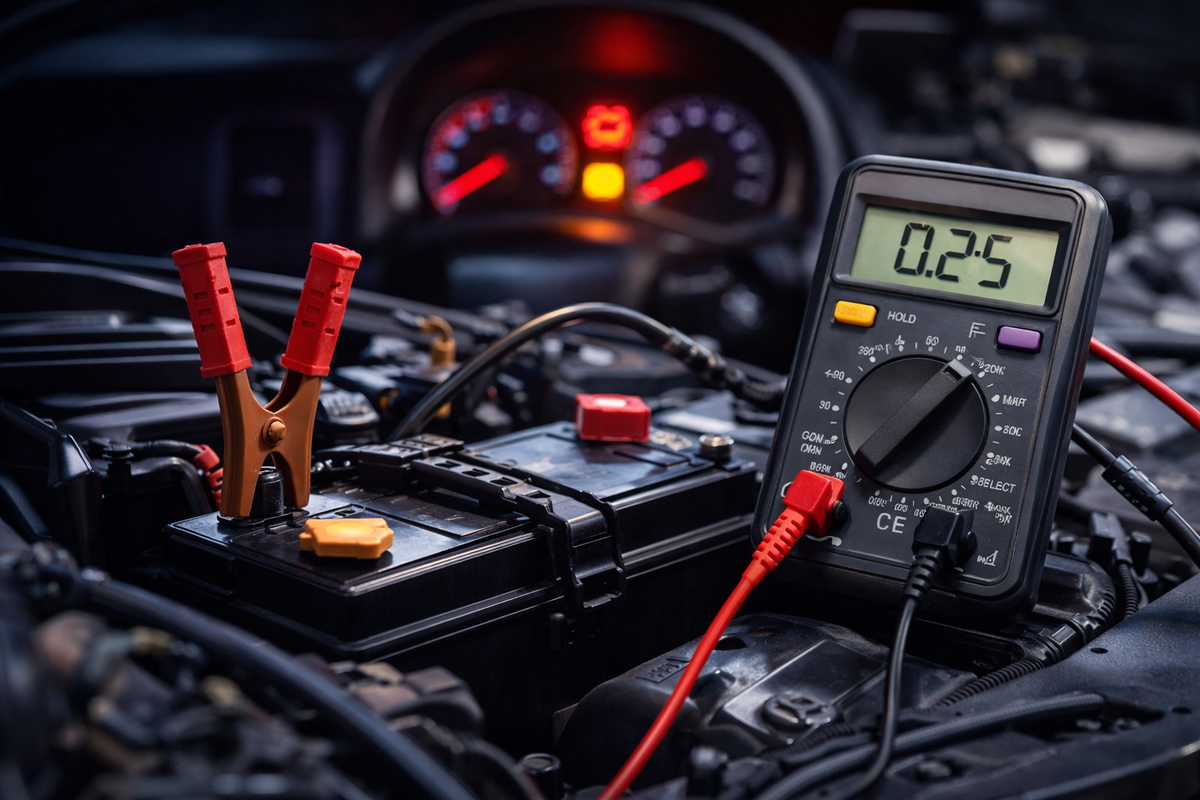
Modern vehicles are equipped with an increasing number of electronic components every day. While this significantly improves driving comfort and convenience, it also introduces certain technical challenges. One of the most common issues drivers face is a suddenly dead battery. This problem often occurs when the vehicle is parked, and one of the main causes is known as parasitic drain.
In this article, we’ll take a detailed look at why car batteries suddenly discharge, what parasitic drain is, how to detect it, and how to prevent it.
What Is Parasitic Drain?
Parasitic drain refers to the continuous draw of electrical power from the battery even when the vehicle is turned off and not in use. In fact, a small amount of drain is completely normal. Systems such as the alarm, central locking, clock, and ECU memory require minimal power even when the car is off.
However, when this power consumption exceeds normal levels, it can drain the battery within a few hours or overnight.
Why Does a Car Battery Suddenly Die?
1. Hidden Electrical Leaks
Worn-out wiring or faulty connections in the vehicle’s electrical system can lead to continuous power draw. These issues are often difficult to detect.
2. Faulty Electronic Modules
If systems like infotainment units, control modules, or sensors fail to enter “sleep mode,” they may continue consuming power.
3. Lights or Systems Left On
- Interior lights
- Glove box light
- Trunk light
Even small lights can drain the battery within hours.
4. Aftermarket Accessories
Devices installed after purchase, such as:
- Audio systems
- Camera systems
- GPS trackers
can become major sources of parasitic drain if not installed correctly.
5. Weak or Aging Battery
An old battery nearing the end of its lifespan can discharge much faster, even with minor electrical leaks. Typically, a car battery lasts between 3 to 5 years.
How to Identify Parasitic Drain
You may have a parasitic drain issue if you notice:
- The car won’t start after being parked for a few hours
- The engine doesn’t crank in the morning
- The battery drains repeatedly despite being new
- Electrical systems behave inconsistently
How to Measure Parasitic Drain
Parasitic current is usually measured using a multimeter:
- Turn off the vehicle completely
- Disconnect the negative terminal of the battery
- Connect the multimeter in series
- Take the measurement
Under normal conditions, most vehicles should show a reading between 20–50 mA.
If the reading is higher, it indicates an abnormal electrical draw.
How to Locate the Source
To identify the source of the drain:
- Remove fuses one by one
- Observe changes in the current reading
- Identify the circuit causing the issue
Since this process requires technical knowledge and proper tools, professional assistance is recommended.
Tips to Prevent Battery Drain
✔ Disconnect the battery if the car will not be used for an extended period
✔ Start the vehicle at least once or twice a week
✔ Ensure proper installation of aftermarket accessories
✔ Perform regular battery maintenance
✔ Check the charging system (alternator) periodically
Parasitic Drain in Modern Vehicles
Modern cars are equipped with hundreds of sensors and control units. When these systems malfunction, parasitic drain becomes more common. This is especially true for:
- Keyless entry systems
- Remote connectivity features
- Always-on software modules
These technologies can significantly increase battery consumption if not functioning properly.
Conclusion: Small Drain, Big Problem
A suddenly dead battery is rarely a coincidence. In most cases, it is caused by unnoticed electrical consumption in the background. If left undiagnosed, parasitic drain can leave you stranded and may lead to more serious electrical issues.
Regular inspections and informed usage not only extend battery life but also enhance overall driving safety.