
China’s Automotive Market Impact on Europe: Macro Trends and Future Outlook
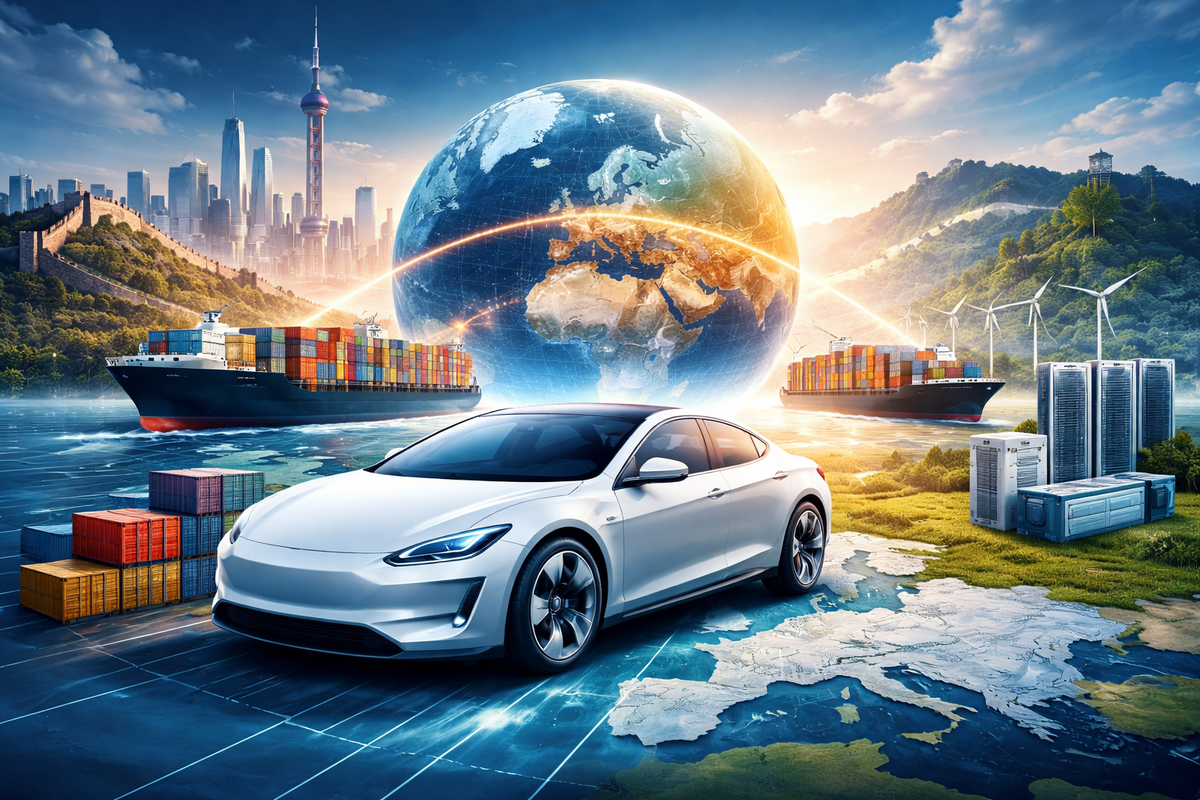
Macro Overview: China’s Automotive Industry and Global Expansion
China’s automotive production and sales have grown steadily over the past five years. In 2024, production reached 31.28 million units, with total sales at 31.43 million, reflecting a 3–4% annual growth rate.
Exports are a key growth driver. In 2024, China exported 5.86 million vehicles, representing a 19.3% year-on-year increase. Projections for 2025 indicate exports could reach 6.8 million units, up from 3.11 million in 2022.
This surge translates into a trade volume of approximately 798.39 billion yuan (~112.8 billion USD), solidifying China’s role as the world’s largest automotive exporter.
Dominance in New Energy Vehicles (NEVs)
China has become a global powerhouse in EVs. In 2024:
- 12.88 million NEVs produced (+34.4% YoY)
- NEVs accounted for 40.9% of total vehicle sales
According to European data, 55% of EV imports into Europe originate from China, highlighting its growing dominance in global electrification.
Foreign Direct Investment and Global Expansion
Chinese automotive and green technology companies are increasing overseas investments. In 2024, Chinese FDI into the EU and UK rose 47% year-on-year, reaching €10 billion.
Major players such as BYD are expanding production capacity in Europe, targeting 500,000 vehicles annually through new plants in Hungary and Türkiye.
However, Europe remains dependent on China for critical materials:
- EU produces only 7% of global battery supply
- China and the U.S. control 87% of the supply chain
- China dominates 60% of rare earth mining and 85% of processing
This creates supply chain vulnerabilities for European manufacturers.
Trend Analysis: EVs, Batteries, and Technology Competition
Electric Vehicle Production and Export Trends
Chinese OEMs are rapidly scaling EV production.
- CATL leads the global battery market with 39.2% share
- BYD follows with 16.4%
- Combined, they control 55.6% of global capacity
In Europe:
- BYD registrations surged 268% in 2025 (187,657 units)
- Tesla registrations declined 26%
Chinese brands’ market share in Europe (EU+EFTA+UK) rose to ~7% in 2025, up from 3% the previous year.
Battery and Supply Chain Dynamics
Europe remains reliant on China for battery technology and raw materials.
Chinese companies such as CATL, BYD, CALB, and Gotion dominate global installations. For example, CATL reached 464.7 GWh capacity in 2025, ranking first globally.
At the same time, Europe is attempting to reduce dependency through:
- Local battery production initiatives
- Strategic partnerships (Canada, Australia, Africa)
- Regulatory frameworks like the Critical Raw Materials Act
Connected Vehicles and Software Innovation
China is also advancing in:
- Autonomous driving
- Connected vehicle ecosystems
- In-car software and infotainment
Tech giants like Baidu, Huawei, and Xiaomi are driving innovation, enhancing the competitiveness of Chinese vehicles globally. Many Chinese EVs are adapted to meet European safety and software standards before market entry.
Cost Advantage and Pricing Pressure
Chinese vehicles are highly competitive in pricing.
For example:
- BYD Seal U DM-i starts at ~$40,600
- Comparable Volkswagen Tiguan eHybrid starts at ~$58,000
Despite this advantage, the EU imposed additional tariffs of up to 17% on Chinese EVs in 2024. In response, Chinese manufacturers are shifting focus toward hybrid models to remain competitive in Europe.
Impact on the European Market
Market Share and Competitive Pressure
Chinese brands such as MG (SAIC), BYD, and Chery are rapidly increasing their presence in Europe. Their combined share is approaching 7%, creating significant price pressure on European and Japanese manufacturers.
Lower-cost EVs are becoming increasingly attractive to European consumers.
Supply Chain Risks and Opportunities
China’s control over key materials and components presents both risks and opportunities:
Risks:
- Supply disruptions (e.g., rare earth restrictions)
- Dependency on Chinese imports
Opportunities:
- Chinese investments in European manufacturing
- Strengthening local supply chains through partnerships
Regulation and Safety Compliance
The EU has introduced policies to regulate Chinese imports, including tariffs and stricter standards.
However, Chinese vehicles are increasingly meeting European benchmarks:
- Many Chinese EVs achieve 5-star Euro NCAP ratings
This demonstrates their growing technical competitiveness.
Local Production and Employment
Chinese investments are reshaping European production:
- New plants in Hungary and Türkiye
- Increased local employment
- Expansion of regional manufacturing capacity
At the same time, competition may pressure established OEMs like Volkswagen and Stellantis.
Future Scenarios (2026–2030)
Optimistic Scenario
- EU strengthens domestic EV and battery production
- China and Europe increase technological cooperation
- Balanced competition emerges
Base Scenario
- Chinese EV exports grow 10–20% annually
- EU maintains protective measures
- Market stabilizes with shared dominance
Pessimistic Scenario
- Trade tensions escalate
- Higher tariffs and restrictions introduced
- Global supply chains fragment
Strategic Recommendations
For European OEMs
- Invest in R&D and cost efficiency
- Accelerate EV and hybrid production
- Focus on high-value technologies (software, autonomy)
For Policymakers
- Diversify supply chains
- Support domestic EV production
- Ensure fair competition through regulation
Collaboration and Innovation
- Encourage EU–China joint research initiatives
- Strengthen knowledge exchange
- Promote transparency in environmental and safety standards
Conclusion and Actionable Insights
China’s rapid rise in the automotive sector is fundamentally reshaping the global market—especially in Europe.
To remain competitive, Europe must:
- Scale EV production and innovation
- Reduce dependency on critical imports
- Strengthen industrial policy and supply chains
- Foster strategic international collaboration
The coming decade will be defined by how effectively Europe responds to China’s growing influence in mobility, electrification, and automotive technology.