
What Are CLTC, WLTP and EPA Protocols in Electric Vehicle Measurements?
Why Are Electric Vehicle Range Figures Explained Differently?
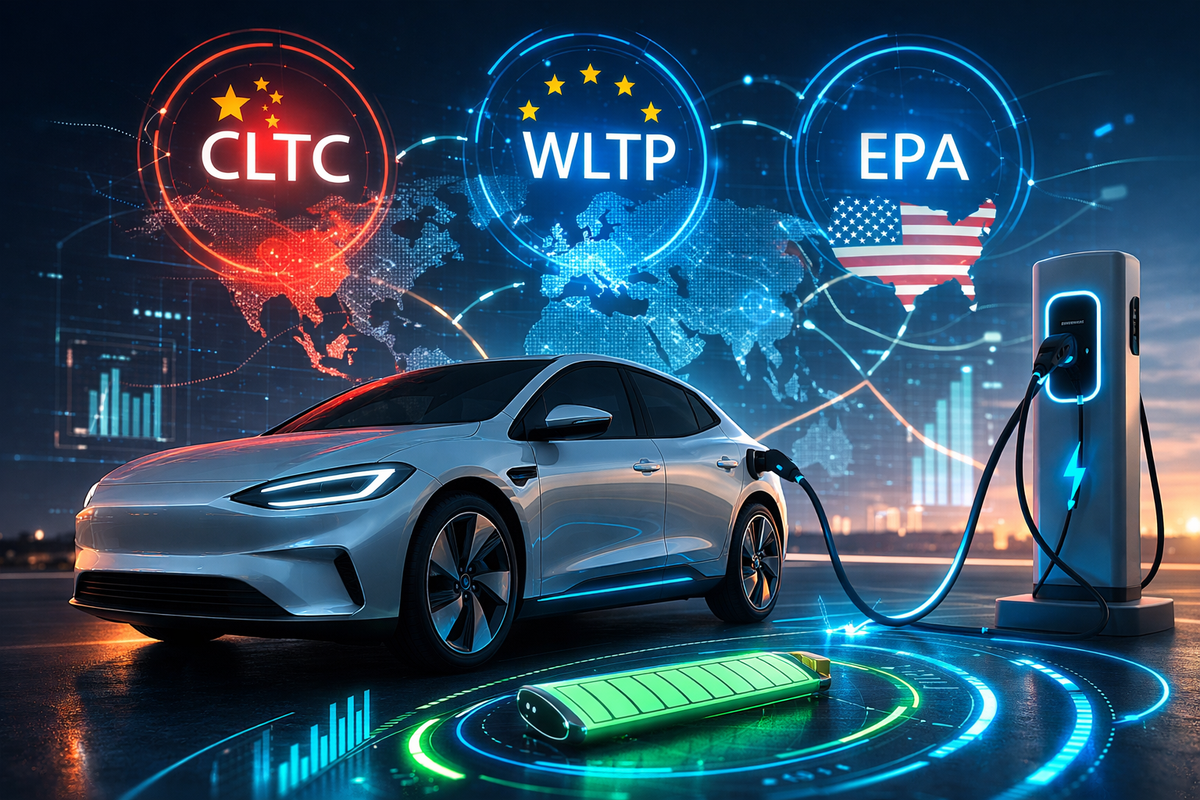
Electric vehicles (EVs) are being preferred by more consumers every year. However, the fact that the range figures presented in vehicle specifications vary across different countries can create confusion for consumers. The same vehicle model may be advertised with a 600 km range in one market and 480 km in another, and the main reason for this difference is usually the use of different testing protocols.
There are three widely used global standards for measuring electric vehicle range:
- CLTC (China Light-Duty Vehicle Test Cycle)
- WLTP (Worldwide Harmonized Light Vehicles Test Procedure)
- EPA (Environmental Protection Agency)
These protocols measure vehicle performance in laboratory conditions based on predefined driving scenarios. However, because driving cycles, temperature conditions, speeds, and energy consumption parameters differ, the results can vary significantly.
In this article, we will examine the technical meaning of CLTC, WLTP, and EPA tests, how they are applied, and the key differences between them.
What Is CLTC (China Light-Duty Vehicle Test Cycle)?
CLTC is an electric vehicle testing standard developed in China and designed around traffic dynamics commonly found in major Chinese cities. This protocol is used to measure the official range of electric vehicles sold in the Chinese automotive market.
Technical Characteristics of the CLTC Test
The primary goal of the CLTC protocol is to simulate dense urban traffic conditions. For this reason, the driving cycle mainly consists of low speeds and frequent stop-and-go scenarios.
Key technical parameters include:
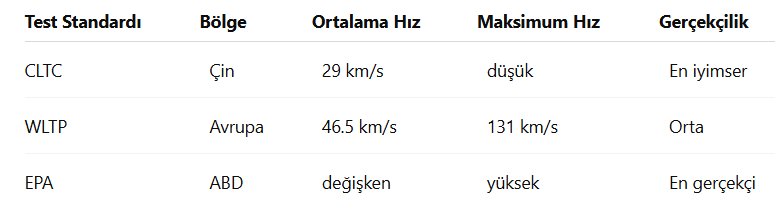
- Average speed: approximately 29 km/h
- Stop ratio: approximately 22%
- Test duration: around 1800 seconds
- Highway driving share: very limited
- Acceleration profile: smooth and low acceleration
Because of this structure, high-speed driving and long highway scenarios are minimally represented in CLTC tests.
Why Does CLTC Show Higher Range Values?
Electric vehicles operate more efficiently at lower speeds. Since the CLTC protocol contains fewer high-speed scenarios, energy consumption appears lower, which leads to:
- Higher reported vehicle range values
- More optimistic test results
For this reason, CLTC results can often be 20–30% higher than real-world driving conditions.
What Is WLTP (Worldwide Harmonized Light Vehicles Test Procedure)?
WLTP is the testing procedure used in the European Union and adopted by many countries around the world. It replaced the older NEDC testing standard in 2017.
The goal of WLTP is to provide a measurement method that better reflects real driving conditions.
Technical Characteristics of the WLTP Test
The WLTP driving cycle has a more dynamic structure and includes multiple driving scenarios.
Key parameters include:
- Test duration: approximately 30 minutes
- Maximum speed: 131 km/h
- Average speed: about 46.5 km/h
- Test distance: around 23 km
- Driving phases: low, medium, high, and extra-high speed sections
Thanks to this structure, WLTP represents a mixed driving scenario that includes both city and highway driving.
Why Is WLTP Closer to Real-World Driving?
Although WLTP is considered more realistic than older testing methods, it still does not perfectly replicate real-world driving conditions. One of the main reasons is that tests are conducted in controlled laboratory environments.
Test conditions typically include:
- Temperature: 23°C
- Limited use of climate systems and auxiliary equipment
- No road gradient or wind resistance
As a result, WLTP range figures in real usage are often 15–20% lower than official test results.
What Is the EPA (Environmental Protection Agency) Test Protocol?
The EPA standard is used in the United States for measuring electric vehicle range and is widely considered the most conservative and realistic testing method.
Developed by the U.S. Environmental Protection Agency, this protocol evaluates vehicle energy consumption under more demanding conditions.
Technical Characteristics of the EPA Test
EPA testing consists of multiple driving cycles combined together, covering different driving situations such as:
- City driving
- Highway driving
- High-speed scenarios
- Cold weather conditions
Key characteristics include:
- High-speed driving scenarios
- Use of air conditioning and auxiliary systems
- Cold temperature cycles down to −7°C
Additionally, the EPA multiplies laboratory results by a 0.7 adjustment factor before publishing them. This method helps reduce the gap between laboratory data and real-world driving performance.
Why Does EPA Show Lower Range Values?
Because EPA tests include more demanding conditions, energy consumption is calculated at a higher level. As a result:
- Published range figures appear lower
- However, they are closer to real-world driving performance
For this reason, many automotive experts prefer to use EPA data when comparing electric vehicle ranges.
Key Differences Between CLTC, WLTP and EPA
To better understand electric vehicle range tests, it is useful to compare the fundamental characteristics of these protocols.
In general, the range values for the same vehicle follow this order:
CLTC > WLTP > EPA
For example, a vehicle might be advertised with the following ranges:
- CLTC: 600 km
- WLTP: 520 km
- EPA: 480 km
The difference does not come from the vehicle itself, but from the testing methodology used to measure the range.
Which Range Standard Should You Trust When Buying an Electric Vehicle?
When purchasing an electric vehicle, focusing only on the advertised range number can be misleading. Manufacturers may use different testing standards depending on the market where the vehicle is sold.
For a more accurate evaluation, consider the following points:
1. Check the Testing Standard
Always verify whether the range figure is based on CLTC, WLTP, or EPA measurements.
2. Consider Real-World Driving Conditions
Factors such as temperature, driving style, speed, and climate control usage can significantly affect vehicle range.
3. Review Real User Data
Independent tests and user experiences often provide more realistic insights than laboratory results.
CLTC – WLTP – EPA Conversion Table
One of the most common questions when comparing electric vehicle range values is:
“What does a CLTC range correspond to in WLTP or EPA standards?”
Since the testing methodologies and driving cycles differ, approximate conversion ratios are often used.
Although not exact, widely accepted estimates are as follows:
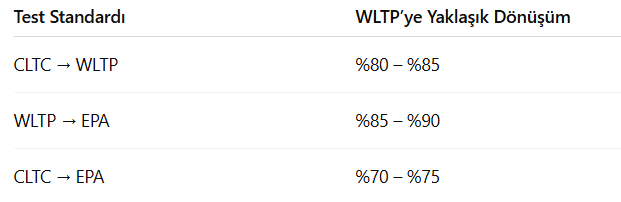
For example, if an electric vehicle is announced with a 700 km CLTC range, the approximate equivalents may be:
- WLTP: 560 – 595 km
- EPA: 490 – 525 km
Therefore, when comparing vehicles across different markets, it is essential to consider which testing standard the range figure is based on.
Evaluating the testing protocol behind the range figure allows consumers to make a more accurate comparison when choosing an electric vehicle.
Factors That Affect Electric Vehicle Range
Electric vehicle range is typically determined using manufacturer test results. However, in real-world conditions, range can vary depending on driving behavior, environmental conditions, and vehicle technology.
For this reason, EV owners should pay attention not only to testing standards but also to factors that directly influence range performance.
Temperature
Electric vehicle batteries are highly sensitive to temperature. In cold weather, the chemical reactions inside the battery slow down, which reduces energy efficiency.
Key reasons for range loss in cold weather include:
- Additional energy required to bring the battery to its optimal operating temperature
- Increased energy consumption for cabin heating
- Reduced efficiency of regenerative braking
At temperatures below 0°C, EV range can decrease by 10% to 30%.
Driving Speed
Driving speed is one of the most important factors affecting energy consumption in electric vehicles. As speed increases, aerodynamic drag rises exponentially, causing the battery to drain faster.
Generally:
- Lower city speeds provide higher efficiency
- Highway driving significantly reduces range
This is why testing protocols such as CLTC that emphasize lower speeds produce higher range values, while EPA tests with higher speed scenarios produce more realistic results.
Air Conditioning and Heating Usage
In electric vehicles, climate control systems draw energy directly from the battery. This can noticeably affect range, especially during long trips.
From an energy consumption perspective:
- Cabin heating systems typically consume the most energy
- Air conditioning can increase consumption by around 5–10%
Many modern EVs use heat pump technology to reduce this energy consumption and minimize range loss.
Battery Chemistry
The chemical composition of EV batteries also plays an important role in determining range performance. The most common battery types used today include:
- NMC (Nickel Manganese Cobalt)
- LFP (Lithium Iron Phosphate)
NMC batteries generally offer higher energy density, enabling longer range. However, LFP batteries provide advantages in durability and safety.
Advances in battery technology will likely lead to even greater driving ranges in the future.
Tire Pressure
Tire pressure is another factor that directly affects energy consumption. Low tire pressure increases rolling resistance, forcing the motor to consume more energy.
Maintaining proper tire pressure:
- improves energy efficiency
- reduces battery consumption
- enhances overall range performance
For this reason, it is important to regularly check the manufacturer-recommended tire pressure levels.
Road Gradient and Wind
Environmental conditions encountered during driving can also affect electric vehicle range.
For example:
- Uphill driving causes faster battery consumption
- Strong headwinds increase aerodynamic resistance and energy usage
On the other hand, during downhill driving, regenerative braking systems can recover part of the energy and send it back to the battery.
Conclusion
The reason electric vehicle range figures vary across different countries is mainly due to the use of different testing protocols.
- CLTC provides the most optimistic results due to its low-speed, city-focused structure.
- WLTP offers a more balanced testing method used widely in Europe.
- EPA includes high speeds, climate usage, and cold weather scenarios, making it the most realistic range standard.
For this reason, when purchasing an electric vehicle, it is important to look not only at the range number itself but also which testing standard the number is based on. This helps consumers better understand the vehicle’s real-world performance and make a more informed decision.