
What Are Car Segments? Full Guide to A, B, C, D, E, F Vehicle Classes
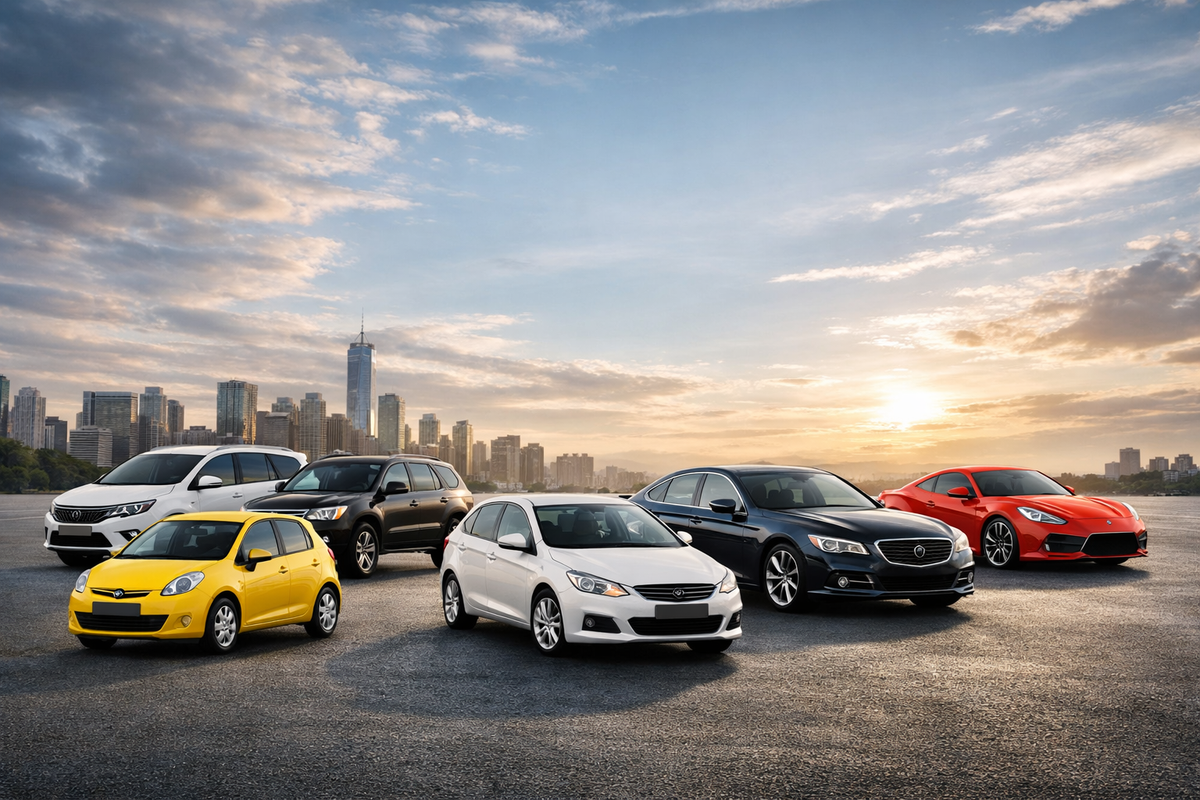
One of the concepts frequently heard when buying a car is vehicle segments. However, for many people, this concept is not entirely clear. What determines whether a car belongs to the A segment, C segment, or D segment? Are vehicles classified only by their size, or do factors such as performance and equipment also play a role in this classification?
In the automotive world, vehicles are not classified only by brand and model. They are also categorized according to criteria such as size, interior space, intended use, equipment level, and price range. This classification system is called vehicle segments.
In this guide, we will examine what car segments are, which criteria determine them, and all automobile classes from A segment to F segment in detail. We will also explain which segments include different vehicle categories such as SUVs, MPVs, and sports cars.
What Is a Car Segment?
A car segment is a classification system used to categorize automobiles based on certain characteristics. Thanks to this system, vehicles with similar size, equipment level, and intended use are grouped under the same category.
The most commonly used system in the automotive industry is the European vehicle segment classification. In this system, automobiles are generally classified from A segment to F segment.
This classification makes it possible to:
- Compare vehicles more easily
- Help consumers choose cars that suit their needs
- Enable manufacturers to target the market more clearly
- Help consumers plan their budgets more accurately
The segment system is extremely important for both manufacturers and users. For example, small city cars and luxury sedans cannot be evaluated in the same category. Vehicle segments clearly reveal this difference.
In short, car segments are a categorization method that brings order to the automotive world and makes vehicles easier to understand.
Which Criteria Determine Vehicle Segments?
The segment of a car is not determined by a single feature. Automakers and automotive authorities evaluate multiple factors together when defining segments.
The main criteria include:
1. Vehicle Size
The most important factor in determining a segment is the size of the vehicle.
The following measurements are usually considered:
- Vehicle length
- Wheelbase
- Width
- Height
Generally, as the vehicle size increases, the segment also increases.
2. Interior Space and Usability
Factors inside the vehicle also play an important role, such as:
- Passenger space
- Trunk capacity
- Seating arrangement
3. Equipment and Comfort Level
Higher-segment vehicles usually offer:
- Higher-quality materials
- More technology features
- Greater comfort
- Advanced safety systems
4. Engine Power and Performance
Engine power is not the only determining factor, but as segments increase, there is usually an increase in:
- Engine capacity
- Performance
- Driving characteristics
5. Price Range
As the segment increases, the following elements also increase:
- Production cost
- Equipment level
- Technology
Therefore, vehicle prices also tend to rise.
A Segment Cars (Mini Class)
A segment vehicles represent the smallest class in the automotive world. These cars are compact vehicles designed mainly for urban driving.
Thanks to their small size, they can easily move through narrow streets, and parking is very easy. Since they usually have small engine capacities, their fuel consumption is also very economical.
A segment cars are generally suitable for two or four people, which is why they are often preferred by individual users and city commuters.
Examples of A Segment Cars
- Fiat 500
- Hyundai i10
- Kia Picanto
- Volkswagen Up
- Toyota Aygo
B Segment Cars (Small Class)
B segment vehicles are known as small class cars and are among the most popular automobile categories in Türkiye and many other countries.
These vehicles are compact enough for city driving while also offering sufficient interior space for small families. Their low fuel consumption and relatively affordable prices also increase their popularity.
Popular models in the B segment include:
- Renault Clio
- Volkswagen Polo
- Hyundai i20
- Toyota Yaris
- Peugeot 208
These vehicles are often ideal choices for first-time car buyers.
C Segment Cars (Compact Class)
C segment cars are called compact class vehicles and are one of the most preferred vehicle categories worldwide.
Cars in this segment offer a balanced structure for both city driving and long-distance travel. Compared to B segment vehicles, they provide more interior space and usually stronger engine options.
C segment vehicles are also very suitable for family use. A spacious cabin, advanced safety systems, and higher comfort levels are among the most notable features of this segment.
Popular examples include:
- Volkswagen Golf
- Toyota Corolla
- Honda Civic
- Ford Focus
- Hyundai Elantra
D Segment Cars (Mid-Size Class)
D segment vehicles are known as mid-size cars and are generally larger, more comfortable, and more powerful.
Cars in this segment are particularly successful in terms of long-distance comfort. Spacious cabins, high-quality interior materials, and advanced driving technologies become more prominent in this class.
D segment vehicles are frequently preferred by users who want a comfortable family car or a prestigious business vehicle.
Popular models include:
- Volkswagen Passat
- Toyota Camry
- Skoda Superb
- BMW 3 Series
- Mercedes-Benz C-Class
E Segment Cars (Upper Mid-Size / Executive Class)
E segment vehicles are considered the transition point into the premium class. Cars in this segment offer high comfort, advanced technology, and strong performance.
These vehicles typically include:
- Advanced driver assistance systems
- High-quality interior materials
- Very spacious cabins
In addition, driving comfort and cabin insulation are significantly improved in this segment.
Examples include:
- BMW 5 Series
- Mercedes-Benz E-Class
- Audi A6
- Lexus ES
- Volvo S90
F Segment Cars (Luxury Class)
F segment vehicles represent the highest class in the automotive world. These cars are among the most advanced in terms of luxury, comfort, and technology.
Vehicles in this segment often feature:
- Handcrafted interior designs
- The latest driver assistance technologies
- Extremely powerful engine options
Notable models include:
- Mercedes-Benz S-Class
- BMW 7 Series
- Audi A8
- Lexus LS
- Bentley Flying Spur
What Are J, M, and S Segment Vehicles?
Although car segments are generally known as A through F, there are also special segments defined according to different usage purposes in the automotive world. The most notable of these are the J segment, M segment, and S segment.
Unlike the traditional segments, these categories are more closely related to vehicle purpose and body type rather than size.
J Segment Vehicles (SUV / Crossover)
J segment vehicles include SUVs and crossover vehicles with a higher body structure.
These cars are designed to provide comfortable city driving while also performing well in challenging road conditions.
Typical features include:
- High driving position
- Spacious interior
- Powerful engine options
- 4x2 or 4x4 drivetrain
With the growing popularity of SUVs in recent years, the J segment has become one of the fastest-growing vehicle categories worldwide.
Examples of J Segment Vehicles
- Nissan Qashqai
- Peugeot 3008
- Hyundai Tucson
- Volkswagen Tiguan
- Toyota RAV4
These vehicles are highly preferred for family use and long-distance travel.
M Segment Vehicles (MPV – Multi-Purpose Vehicles)
M segment vehicles include MPVs (Multi-Purpose Vehicles) designed primarily for large families and transporting multiple passengers.
The most important feature of M segment vehicles is their maximum interior space and flexible seating layout.
These vehicles typically offer:
- 5, 6, or 7 seats
- Large luggage capacity
- Modular seating systems
- Spacious cabin design
Thanks to these features, M segment vehicles are ideal for:
- Family use
- Long trips
- Commercial transportation
Examples of M Segment Vehicles
- Renault Scenic
- Ford S-Max
- Volkswagen Touran
- Citroën C4 SpaceTourer
- Opel Zafira
MPV vehicles have been among the most popular family cars in Europe for many years.
S Segment Vehicles (Sports Cars)
S segment vehicles represent sports cars in the automotive world.
These vehicles are typically designed to offer high performance, powerful engines, and a sporty driving experience.
Common features include:
- Two-door design
- Two or four seats
- High-performance engines
- Aerodynamic body structure
These cars are mainly produced for driving pleasure and performance, making them highly attractive to automobile enthusiasts.
Examples of S Segment Vehicles
- Porsche 911
- Audi TT
- BMW Z4
- Mazda MX-5
- Chevrolet Corvette
S segment vehicles are among the most eye-catching cars in terms of design, performance, and driving dynamics.
Difference Between J, M, S Segments and Other Segments
While the traditional A to F segments are mainly determined by vehicle size and class, J, M, and S segments are defined according to vehicle purpose and body type.
In summary:
- J Segment: SUVs and crossover vehicles
- M Segment: MPVs and large family vehicles
- S Segment: Sports cars
These segments help people better understand vehicle diversity and choose the right car according to their needs.
Difference Between Vehicle Segment and Body Type
One of the most common mistakes in the automotive world is thinking that vehicle segment and body type are the same thing. However, these two concepts are completely different.
- Segment refers to the size and class of the vehicle.
- Body type refers to the design and usage style of the vehicle.
For example, a car can belong to the C segment but have sedan, hatchback, or SUV body styles. It is quite normal for different body types to exist within the same segment.
- Hatchback vehicles are known for their compact size and practicality.
- Sedans have a more traditional design with a separate trunk.
- SUVs stand out with their higher body structure and spacious interior.
For this reason, when buying a car, it is important to consider not only the segment but also the body type.
Conclusion
Vehicle segments are an important system that classifies cars according to size, comfort, equipment level, and intended use. Thanks to this system, it becomes much easier to compare cars and choose the right vehicle for your needs.
In general:
- A and B segments include small city cars
- C segment includes balanced family cars
- D segment offers larger and more comfortable vehicles
- E and F segments represent premium and luxury automobiles
If you are considering buying a car, understanding vehicle segments will give you a significant advantage when choosing the most suitable car for your needs.