
Should You Wash a Car Engine? Why Experts Say You Should Never Let a Car Wash Do It
Should You Wash a Car Engine? Never Let a Car Wash Do It
Many drivers who take their vehicles to a car wash are often asked: “Should we wash the engine too?”
A clean engine bay may sound appealing. However, the truth is that engine washing at typical car washes often involves serious risks.
Because modern vehicles contain sensitive electronic components, an incorrect engine washing process can even prevent the car from starting.
For this reason, most automotive experts do not recommend unnecessary engine washing.
So, should you really wash your car engine?
What are the risks of engine washing?
And how should engine cleaning actually be done?
Here are all the details you need to know.
Is Washing the Engine Really Necessary?
Many car owners believe that a clean-looking engine is important. In reality, dust or light dirt on the engine does not affect engine performance.
In modern vehicles, the engine bay is designed to:
- Be closed and protected
- Keep electronic components partially insulated
- Limit dirt and water entering the engine area
Because of this, engine washing is not a mandatory maintenance task for most vehicles.
In fact, washing the engine too frequently may lead to negative consequences.
Over time, a thin layer of oil and dirt naturally forms on engine surfaces. This layer can actually act as a protective barrier for certain metal parts.
If the engine is washed too often:
- This protective layer may disappear
- Metal components may become exposed to corrosion
- Rust and weakening may occur over time
In short, a clean engine does not necessarily mean a healthier engine.
Why Is Engine Washing at Car Washes Risky?
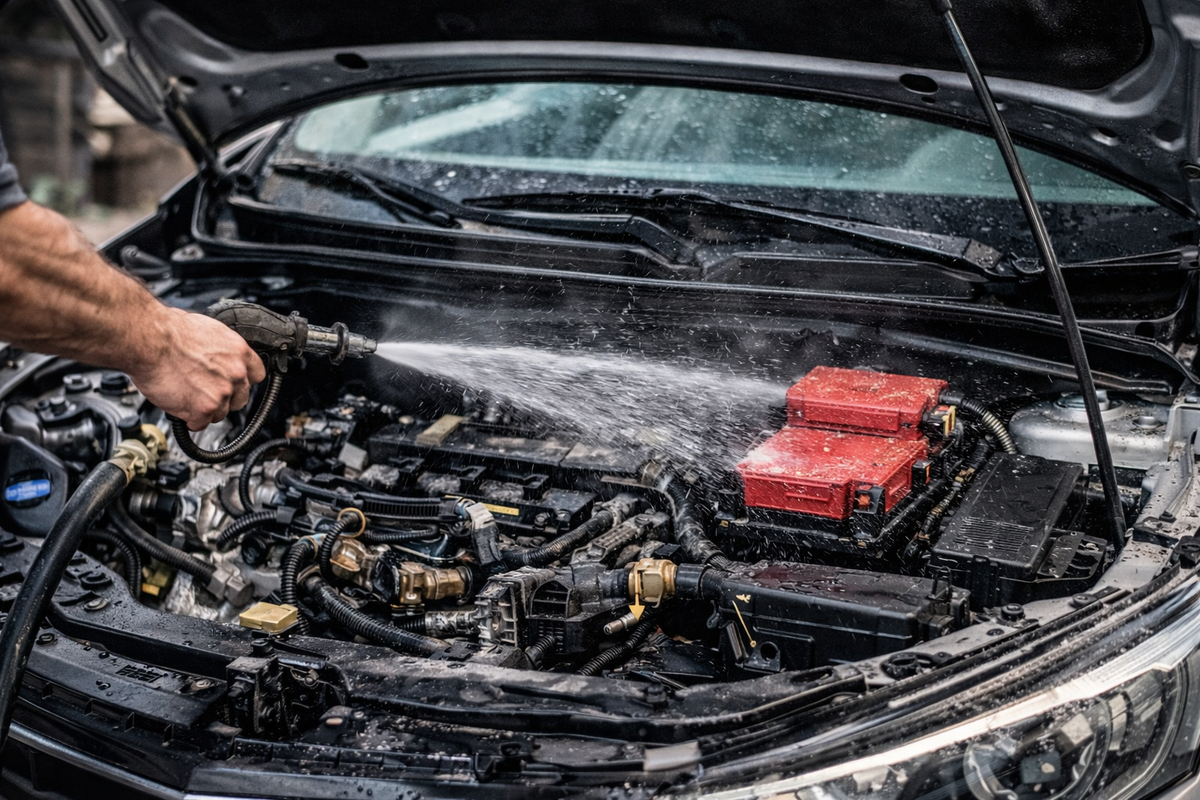
Most car wash businesses clean engines using high-pressure water.
This is where the real risk begins.
Many components inside the engine bay are sensitive to water exposure.
Some of the most vulnerable parts include:
- Fuse box
- ECU (Engine Control Unit)
- Sensors
- Ignition coils
- Spark plug wells
- Electrical wiring harnesses
If pressurized water enters these areas, serious problems can occur.
For example:
- The check engine light may turn on
- The engine may misfire
- Sensors may fail
- The vehicle may not start at all
Additionally, many car wash workers do not properly protect electronic components before washing the engine.
Because of this, many mechanics openly state an important fact:
A significant number of engine faults occur after improper engine washing.
Problems Engine Washing Can Cause
Improper engine cleaning can lead to several issues in a vehicle.
Some of the most common problems include:
- Check engine light turning on
- Irregular idling
- Ignition misfires
- Engine hesitation or misfiring
- Oxidation in electrical wiring
- Sensor failures
Sometimes these issues appear immediately, while in other cases they may show up weeks later.
Especially when sensors or electrical connectors are exposed to water, the resulting repairs can become expensive.
Why Are Modern Engine Bays More Sensitive?
Older vehicles had engine bays that were mostly mechanical. However, modern cars contain far more electronic systems.
Sensitive components around modern engines include:
- ECU (Engine Control Unit)
- Mass air flow sensor
- Electronic throttle body
- Turbo system
- Numerous sensors and wiring harnesses
Most of these systems are sensitive to moisture.
This means that while engine washing was less risky in older cars, it is much more dangerous in modern vehicles.
Common Problems After Engine Washing
Many vehicles brought to repair shops after engine washing show the following issues:
- The car does not start
- Engine misfires
- Check engine light appears
- Cooling fan runs constantly
- Electrical system errors
Most of these problems are caused by wet sensors or electrical connections.
When Is Engine Cleaning Acceptable?
It is not entirely correct to say engine washing should never be done. However, it should only be performed when necessary.
Engine cleaning may be justified in cases such as:
- A major oil leak
- Heavy buildup of grease or dirt
- Preparing a car for sale
- During maintenance under professional supervision
In such situations, engine cleaning must be done carefully and in a controlled way.
How Should an Engine Be Cleaned?
If engine cleaning is required, several important rules should be followed.
The correct method includes:
- The engine must be completely cool before cleaning
- Electronic components and the fuse box should be protected
- High-pressure water should not be used
- A dedicated engine cleaning spray should be preferred
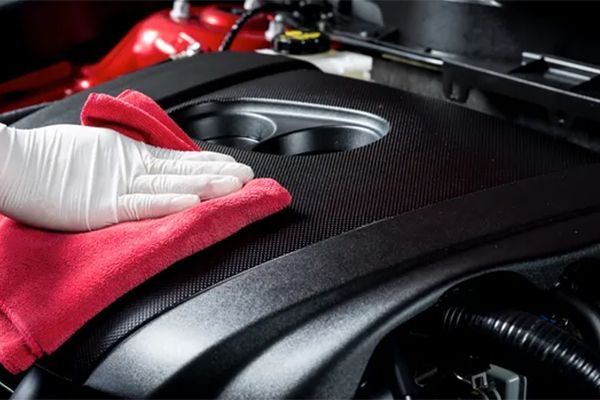
- Cleaning should be done with a microfiber cloth or sponge
If necessary, engine parts can be cleaned using very light amounts of cool water.
However, one important rule must be followed:
Water should never be used near the air filter or sensitive electronics.
After cleaning:
- The vehicle should not be driven immediately
- All components must be completely dry
These steps help prevent damage to the engine.
Alternative Ways to Keep the Engine Clean
You do not have to wash the engine to keep it clean.
Safer methods include:
- Periodically wiping dust with a cloth
- Repairing oil leaks early
- Ensuring engine protective plastic covers remain installed
These methods help keep the engine clean and safe.
Engine Protection Instead of Engine Washing
If you want your engine to look clean, there are safer alternatives.
For example:
- Engine protection sprays
- Plastic and rubber care products
- Cleaning during periodic maintenance
Some car owners prefer to clean their engines using sponges and cleaning products instead of pressure water.
For light dirt, you can use:
- A soft sponge
- A microfiber cloth
- Small amounts of cleaning products (such as protective sprays like WD-40)
This method is much safer than using high-pressure water.
Which Vehicles Are More Sensitive to Engine Washing?
Engine washing carries greater risks in certain vehicles.
Extra caution is needed with:
- Diesel vehicles
- Turbocharged engines
- Hybrid vehicles
- New-generation vehicles with many sensors
The complex electronics in these vehicles can be more vulnerable to water damage.
Why Spraying Water on a Running Engine Is Extremely Dangerous
One of the biggest mistakes people make during engine cleaning is spraying water on a running engine.
If too much water enters a running engine, serious damage can occur.
The reason is simple:
- Piston engines operate by compressing gases
- Water cannot be compressed
If water suddenly enters the engine:
- Pistons may become stuck
- The engine may stop rotating
- Internal parts may bend or break
In severe cases, this can completely destroy the engine.
What Experts Say About Engine Washing
Most automotive technicians and manufacturers do not recommend unnecessary engine washing.
The common expert opinion is clear:
Engine cleaning should only be done when necessary and using the correct method.
Routine engine washing at car washes often creates unnecessary risk.
Focus on Proper Maintenance Instead of Washing the Engine
A clean-looking engine does not improve vehicle performance. However, improper engine washing can lead to expensive mechanical problems.
For this reason:
- Avoid unnecessary engine washing
- Never allow high-pressure water to be used on the engine
- If cleaning is necessary, have it done under professional supervision
Remember:
The health of your engine is far more important than how clean it looks.