
Electric Vehicle Battery Life: How Long Does It Last, How to Extend It, and What Does It Really Cost?
Electric vehicles (EVs) are creating a rapid transformation in the automotive world. With their quiet driving experience, low operating costs, and environmentally friendly nature, more people are turning to electric vehicles every year. However, one of the biggest questions on people's minds remains the same: How long does an electric vehicle battery last?
Battery life is one of the most critical factors that directly affects the performance, operating costs, and resale value of electric vehicles. In this article, we will examine in detail how EV batteries work, how long they last, what factors affect their lifespan, and how you can use them in a healthier way for a longer period of time.
What Is an Electric Vehicle Battery and How Does It Work?
The heart of electric vehicles is lithium-ion batteries. These batteries work with technology similar to what is used in smartphones and laptops, but with a much larger capacity.
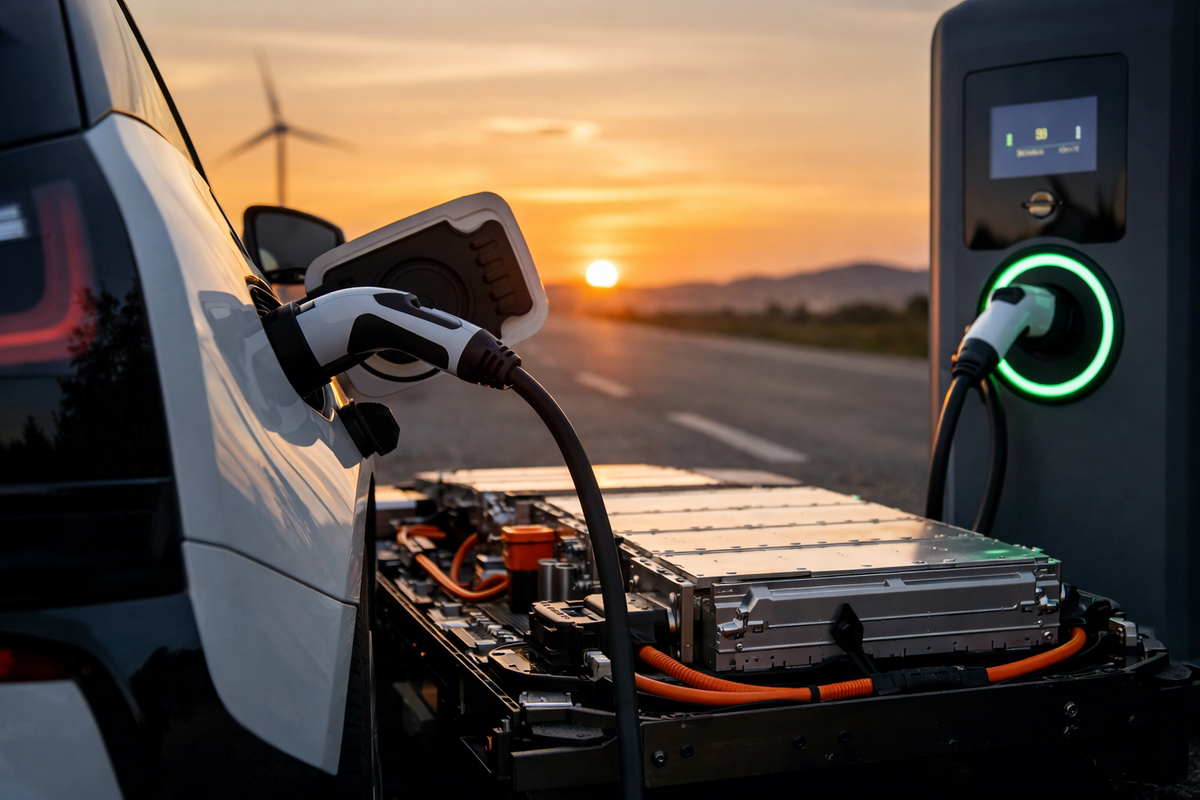
An electric vehicle battery consists of the following components:
- Battery cells
- Battery modules
- Battery management system (BMS)
- Cooling system
Battery cells store electrical energy and deliver it to the vehicle's motor. The Battery Management System (BMS) controls temperature, charge level, and voltage to ensure the battery operates safely and efficiently.
How Long Does an Electric Vehicle Battery Last?
The lifespan of electric vehicle batteries generally ranges between 8 and 15 years. Most manufacturers offer a battery warranty of 8 years or 160,000 km.
However, this period can be even longer depending on usage habits.
On average:
- Capacity after 100,000 km: around 90%
- Capacity after 200,000 km: around 80%
- After 300,000 km: 70–75% capacity
Batteries do not completely fail; instead, they experience capacity degradation over time. This results in a reduction in the vehicle’s driving range.
For example, if a new electric vehicle offers a 500 km range, when the battery capacity drops to 80%, the range may decrease to around 400 km.
Factors That Affect Electric Vehicle Battery Life
Battery lifespan is not determined only by mileage. Usage habits and environmental conditions also play a major role.
1. Charging Habits
Charging the battery constantly from 0% to 100% puts more stress on the cells.
Experts generally recommend using the following range:
20% – 80% battery level
This range helps the battery chemistry operate more stably.
2. Frequent Use of Fast Charging
DC fast charging stations are very convenient, but frequent use can create more heat inside the battery.
Using fast charging occasionally is not a problem, but relying on it constantly may affect battery health in the long term.
3. Temperature
Batteries are affected by extreme heat and extreme cold.
Especially:
- Temperatures above 40°C
- Temperatures below -10°C
can reduce battery performance.
For this reason, modern electric vehicles use liquid-cooled battery systems.
4. Driving Style
Constant:
- hard acceleration
- aggressive driving
- high speeds
can draw more energy from the battery.
This both increases energy consumption and may cause the battery to wear faster over time.
5. Leaving the Vehicle Parked for Long Periods
If an electric vehicle will not be used for a long time, the battery should ideally be kept at:
40% – 60% charge level
Leaving the battery fully charged or completely empty for long periods can negatively affect cell health.
How Much Does EV Battery Replacement Cost?
One of the most common concerns for EV users is the cost of battery replacement.
Battery costs have dropped significantly in recent years.
Average battery costs:
- Small EV batteries: 5,000 – 8,000 USD
- Mid-range EV batteries: 8,000 – 15,000 USD
- Large EV batteries: 15,000 – 25,000 USD
However, most users never experience a battery replacement during their ownership.
Additionally, some manufacturers use modular battery structures that allow only the faulty module to be replaced instead of the entire battery.
How to Extend the Life of an Electric Vehicle Battery
Some simple habits can significantly improve battery lifespan.
1. Use the 20% – 80% Charging Range
Avoid charging the battery to 100% all the time for daily use.
2. Avoid Constant Fast Charging
Whenever possible, prefer AC charging (home charging).
3. Avoid Extreme Heat
If possible, park the vehicle in the shade or in a covered parking area.
4. Install Software Updates
Manufacturers frequently release software updates that improve battery management.
5. Leave the Battery Around 50% If the Vehicle Will Not Be Used
Can Electric Vehicle Batteries Be Recycled?
Yes. A large portion of electric vehicle batteries can be recycled.
Valuable materials inside EV batteries include:
- Lithium
- Cobalt
- Nickel
- Manganese
These materials can be recovered through recycling.
Additionally, old EV batteries can be used for second-life energy storage systems, such as home energy storage solutions.
This allows batteries to be reused in different applications for many more years.
Common Myths About Electric Vehicle Batteries
Batteries fail after 5 years
This is incorrect. Real-world data shows that EV batteries can last well over 10 years.
Battery replacement is extremely expensive
Prices are decreasing every year, and most users never need a replacement.
Cold weather damages the battery
Cold weather mainly causes a temporary reduction in driving range, not permanent battery damage.
What Will the Future of EV Batteries Look Like?
Battery technology is one of the fastest-developing areas in the automotive industry.
One of the most promising upcoming technologies is solid-state batteries.
Advantages include:
- 50% higher energy density
- Faster charging
- Longer lifespan
- Higher safety
Many manufacturers aim to bring this technology into mass production around 2030.
Conclusion
Electric vehicle batteries are far more durable than many people assume. The average EV battery can operate reliably for 8–15 years, and most users will never need a battery replacement during their vehicle ownership.
With proper charging habits and appropriate usage, it is possible to extend battery life even further. As technology continues to improve, batteries will offer longer range, faster charging, and lower costs.
As electric vehicles become more widespread, battery technology will remain one of the most important factors shaping the future of the automotive industry.