
Fiat Tipo 1.4 Fire In-Depth Review: Real-World Fuel Economy, Performance & Common Issues
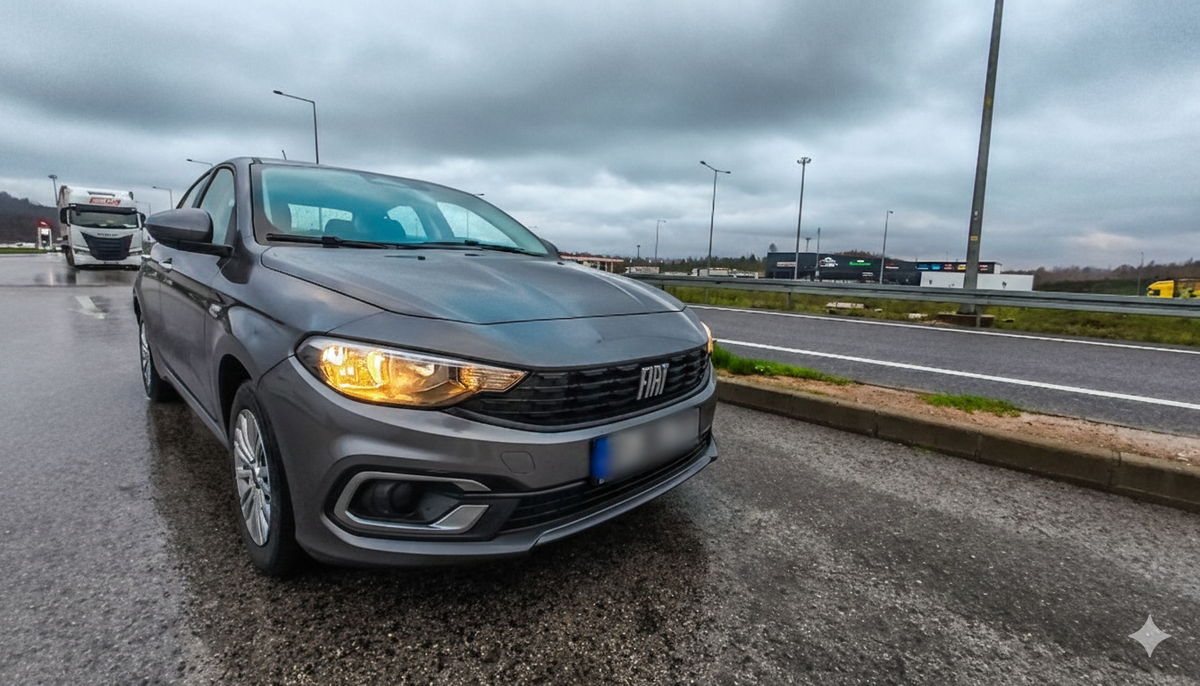
Important Note for International Readers: Please be aware that the driving tests, road conditions, and market dynamics (like pricing and taxi usage) described in this article are specifically based on experiences in Turkey.
Introduction – Why does the Fiat Egea still sell this much?
Even someone following the car market in Turkey from afar would notice one thing: The Egea is everywhere. After driving it personally for 13,000 km, I can clearly say this: This car was built to "get the job done," not to be "admired." If you are not chasing prestige, speed, or technology; if you are looking for a vehicle that will carry you without issues for years, the Egea is still an incredibly logical option. This article is not a catalog review. It's real-life usage. I climbed mountains with this car, went on long road trips, used it in harsh winter conditions, and spent hours in heavy city traffic. So, I believe I have enough extensive driving experience to write this article in detail. Moreover, I am not limited to just my own experience. Every time I got into a taxi using an Egea, I asked the drivers the same questions: Are you happy with the car? At what mileage did the engine need a rebuild? How are the expenses? The answers I got were surprisingly common:
- Incredibly economical to use with LPG
- Very cheap spare parts and maintenance costs
- The engine holds up even after 500,000–600,000 kilometers of heavy use And yes, I saw these mileages with my own eyes. Everyone might love new technologies, giant screens, and powerful accelerations. But for most of us, there is one unchanging reality: costs. Until late 2025, the Egea, with its 1.4 engine option, was by far one of the most accessible models among brand-new cars. This made it the sales leader for years. Today, it remains one of the most accessible "young cars" in the second-hand market.
Engine – Old school but confidence-inspiring
Under the hood of the Fiat Egea is a 1.4-liter naturally aspirated FIRE engine. 95 hp / 127 Nm. It looks weak on paper and yes... it cannot be compared to modern turbo engines. But during long-term use, you realize this: The character of this engine is completely different. No turbo → no complex parts → no high pressure → low risk of expensive breakdowns. Disadvantage? Reluctant at low RPMs. Advantage? It loves high RPMs and is mechanically relaxed. At the end of 13,000 km, the sentence that best summarizes the engine is this: 👉 An engine that won't upset you if you drive it patiently. I want to say something sincere here. I think this car is unfairly criticized, especially regarding performance. You often see comments on the internet like "The Egea can't climb hills." Most of the time, these comments stem from the gap between expectation and reality. This car never claimed, "I have 150 horsepower, high torque, I will fly up the hill at 200 km/h without breaking a sweat." You are using a naturally aspirated, non-turbo engine. What does this mean? When necessary, you will downshift, you will rev the engine, and the engine will do its job. I used this car with 5 people, on long trips, in harsh winter conditions, on steep hills. It never once said, "I won't go." Yes, it doesn't accelerate fast. But I don't have to worry about what will break down today. I don't have the time to buy a car with 150,000 km of unknown history for that money and wander from mechanic to mechanic. Actually, looking at it from the reality of Turkey is enough: The vast majority of taxis in Istanbul are Egeas, and a significant portion of them have the 1.4 FIRE engine. Moreover, they run on LPG. If this car didn't actually do the job, taxi drivers wouldn't use it for years. You don't have to love it. But you have to give it credit: This engine exists for long-term, trouble-free use, not for performance. The same goes for other Egea engines:
- 1.4 FIRE → long-lasting use
- 1.3 Multijet → high economy
- 1.6 Multijet → balance of performance + economy They are all mission-oriented engines catering to different needs.
The oil consumption issue – Through the eyes of a real user
The first thing anyone researching the Egea encounters is: "Does this engine, the 1.4 FIRE, burn oil?" The honest answer—I told you I'd be sincere: Yes, this car burns or consumes oil, whatever you want to call it. What matters is not how the situation appears through the user's eyes, but what it actually is... I spent a lot of time in Egea Facebook groups and read many comments, and I saw a significant number of people claiming it doesn't burn oil. Yes, this is true, they are right too, because the Egea's oil consumption depends entirely on how it is driven. If you push it and drive at high RPMs, it burns oil; if you don't push it, it doesn't. I experienced this personally: when I drove 1,100 kilometers in 11 hours, no oil was consumed, but when I did the return trip of the same route in 9 hours, yes, I observed oil loss. Now you might say, "Above you said to use high RPMs to meet your needs, and now you say it burns oil if used that way." Yes, unfortunately, that's how it is. By the way, oil consumption wasn't much of a problem for me; it was enough to last from maintenance to maintenance, but knowing I would write this article one day, I kept track of it. (I drive at high RPMs, I push the car hard—those who watch my YouTube videos know I haven't treated this car well at all, yet it still didn't let me down regarding oil.)
So why does the Fiat Egea 1.4 FIRE burn oil? As a result of my impressions and research, the root of the problem is definitely a factory design choice. Automakers try to minimize internal engine friction to ensure cars consume less fuel and meet strict emission rules. For this reason, Fiat used "low-tension" (helical/spring) piston rings in the 1.4 Fire engines that apply very little pressure to the cylinder wall. These weak-pressure rings reduce friction and fuel consumption, but especially at high RPMs, they cannot fully scrape the oil down the cylinder wall. This unscraped oil enters the combustion chamber, burns along with the petrol, and exits through the exhaust. Additionally, since the factory production tolerances (clearances between engine parts) of these engines are left somewhat wide, these leaks happen even more easily. In short, the car burns oil not because of a malfunction, but because it cannot hold the oil due to the weak factory rings.
Is the Problem Really the Lack of an Oil Cooler? In some internet forums, it is claimed that because these engines lack an oil cooler, the oil overheats, thins out like water, and therefore burns. However, this is not an accurate diagnosis. A YouTube channel named "Teknik Kariyer" tested this claim by installing a custom oil cooler on a 1.4 Egea engine. The result? The car continued to consume oil just like before despite the oil cooler. Because the problem is not the temperature of the oil in the crankcase, but the physical inability of the rings on the pistons to scrape the oil down.
Does Using Different (Thicker) Oils Solve the Problem? One of the most common temporary methods users resort to is using thicker oils like 10W-40 instead of the factory-recommended 5W-40, or adding additives like MoS2 (Molybdenum Disulfide) that thicken the oil. Since a thick liquid will have a harder time leaking through narrow gaps, this method can slightly reduce oil consumption in the short term. However, this is absolutely not a solution; on the contrary, it is a dangerous "band-aid" for the engine. Thick oil reaches the upper parts of the engine very late when first started (when cold), leading to metal-to-metal friction that wears the engine out from the inside. Also, since the variable valve timing systems (VVT) of these engines are designed for thin oil, using thick oil opens the door to larger and more expensive breakdowns in the long run.
What is the Ultimate Solution? (Service Attitudes and Complaint Realities) If you go to an authorized service because your car is burning oil, the procedure usually performed is opening the engine and installing new versions of the same weak factory rings ("re-ringing"). However, consumer complaint platforms are full of records showing this operation usually ends in frustration. For example; a car at 86,000 kilometers had its rings replaced at the service, but only 3,800 kilometers later, it consumed oil again to the point where there was none left on the dipstick. The reason the standard ring replacement done by services fails is this: The insides of the cylinders, having run for thousands of kilometers, lose their perfect roundness over time and become slightly oval. If you install a brand-new round ring into this ovalized housing, oil will escape from the gaps on the edges even more than before.
The method found and applied by taxi drivers who use these vehicles under the harshest conditions is the ultimate solution: Buying the vehicle at 0 kilometers (or very low mileage), while the cylinders haven't worn out yet and are perfectly round, removing the weak factory "helical" rings and installing "steel (rampir) rings" that apply very strong outward pressure. Because the cylinder is brand new, these hard steel rings fit perfectly into the housing and flawlessly scrape the oil, eliminating the oil-burning problem for a lifetime.
If your vehicle is not at 0 kilometers and has tens of thousands of kilometers on it, just installing steel rings isn't enough either. The engine must be completely disassembled, the insides of the cylinders must be shaved down through processes called "reboring and honing" to make them perfectly round again, and appropriately sized steel rings must be installed.
Of course, going and opening up the engine of a zero-kilometer car to install steel rings is an economically unnecessary move if you are not a taxi driver, and nobody wants to or would open the engine of a brand-new car, but unfortunately, this is the definitive solution. If you ask, "What happens if we don't do it and let it consume a little oil?", which is the method we all use, there is absolutely no problem. I use it this way, and everyone I see uses it this way too. I only explained the "why" and the "solution" to you. If you are very bothered by it, you can get it done at reliable places. It's not my preference; even if it consumes oil from maintenance to maintenance, it's enough. There is no situation that poses a problem, just keep an eye on it.
Transmission – Simple and solid
6-speed manual.
It doesn't show off, but it does its job very well.
The gears are crisp, mechanical, and inspire confidence.
The 6th gear provides serious comfort on long highway trips.
Driving – Better than expected handling
It's not a car for pushing the limits, but:
✔ Stable at high speeds
✔ Inspires confidence in corners
✔ Steering responses are predictable
The most accurate description:
👉 Not on the limit, but safe.
The rear torsion beam suspension can feel harsh on broken roads.
Passengers in the back seat especially notice this.
Insulation?
Wind noise starts after 120 km/h.
This is normal for its class.
Fuel consumption – Real-world values
Factory data: 5.7 lt/100 km
Real life:
City driving → 8.5 – 9.5 lt
Long highway trip (calm driving) → 5 – 6 lt
But the real deal:
With LPG, this car is an economy monster.
That's why it sells so much in Turkey.
Safety systems – Massive improvement
A serious update came with 2025. Now, even in the Easy trim (base package):
- Lane tracking (If you don't hold the steering wheel after the first reaction, it bounces you from one end of the lane to the other; don't rely on it entirely)
- Automatic emergency braking (I think it works very well)
- Traffic sign recognition These really come in handy on long trips. But one detail: The fatigue assistant is too sensitive 😄 Sometimes it gives a warning even when I'm not tired at all. I'm not sure if it genuinely realizes I'm tired or if it's just overly sensitive. But there's no harm in it, it's just funny.
Multimedia – Set your expectations right
Easy package = basic package. No tablet screen. No CarPlay. No Android Auto. But:
- It has Bluetooth
- It has USB
- Phone calls are comfortable Those expecting a technology show should look at higher trims.
Family use – The Egea's strongest suit
520 liters of trunk space.
It is truly massive.
Long vacations, baby strollers, suitcases...
You don't even think twice about it.
Rear seat legroom is also very good for its class.
The interior plastics are hard but durable.
This car is built to be "used for years.
Conclusion – Who is this car for?
This car is for those who want:
✔ Cheap purchase price
✔ Cheap maintenance
✔ LPG compatibility
✔ A large trunk
✔ Trouble-free long-term use
It is not for those who want:
❌ Performance
❌ Prestige
❌ Technology show
If you buy it with the right expectations → it is an extremely logical car.
Rating
Engine & Performance: 5/10
Transmission: 7/10
Driving & Comfort: 6.5/10
Fuel & LPG: 8.5/10
Price/Performance: 9.5/10
Overall Score: 7.3 / 10
Review Score
Drivisual Verdict
"In short, the Fiat Egea 1.4 FIRE is not the "flashy sneaker" of the automotive world; it is the "durable and economical work boot." It doesn't accelerate fast or put on a technology show, but it protects your budget and endures heavy use for years. The famous oil consumption issue is not a fatal mechanical failure, but rather a direct result of the low-tension piston ring design chosen by the factory for fuel efficiency. If you don't mind occasionally checking the oil dipstick, it is the most logical, spacious, and cheapest-to-maintain car you can buy for this price. If you set your expectations right, you will never regret it."
Pros
- Affordable Price
- Low Running Costs
- LPG Compatibility
- Spacious Interior
- Mechanical Durability
Cons
- Chronic Oil Consumption
- Weak Performance
- Poor Insulation
- Stiff Suspension
- Old Generation Engine
Technical Specifications
Detailed Data
The passenger compartment of the Tipo remained stable in the frontal offset test. Dummy readings indicated good protection of the knees and femurs of both driver and passenger and FIAT demonstrated that a similar level of protection would be provided to occupants of different sizes and to those in different positions. In the full-width frontal test, measurements of chest deflection indicated marginal protection of the chest for both the driver and rear passenger. Deceleration of the head also indicated a marginal level of protection. In both the side barrier and the side pole impacts the Tipo scored maximum points, with good protection of all critical body areas. Tests on the front seats and head restraints indicated good protection against whiplash injury in the event of a rear-end collision. A geometric assessment of the rear seats indicated a marginal level of whiplash protection was offered here. An autonomous braking system that operates at low speeds typical of city driving is available as part of an optional safety pack but the performance of this system is not assessed in this rating.
This test is performed by km77.com. Results may vary depending on vehicle version and tires.
WLTPFuel Consumption
| Driving Scenario | Consumption (L/100km) |
|---|---|
| Low Speed | 8.4 L |
| Medium Speed | 6.4 L |
| High Speed | 5.6 L |
| Extra High Speed | 7.1 L |
| COMBINED | 6.4 L |