
Renault Clio Mk5 In-Depth Review: Real-World MPG, Reliability & Common Faults
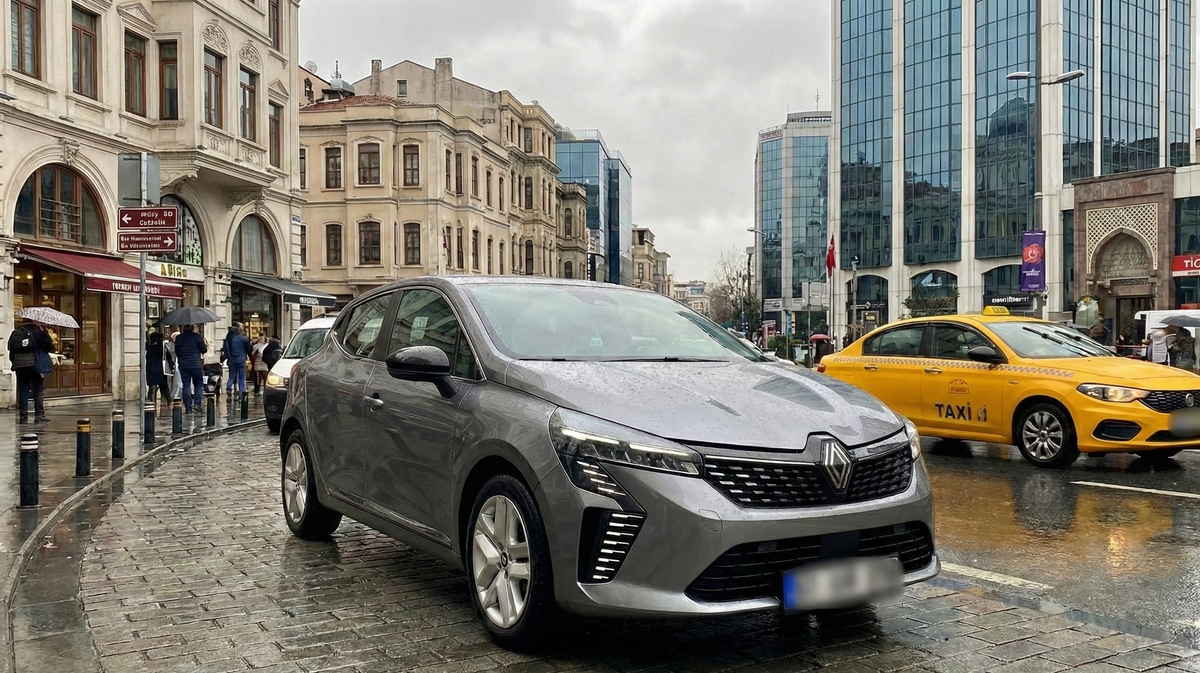
Renault Clio Mk5 Overview: Trim Levels
Welcome. First off, let's clarify: the test vehicle currently sitting in our garage (and under our seat) as we write these lines is a 2024 Renault Clio 1.0 TCe Evolution. We are driving a version equipped with the new generation safety regulations known as GSR2 and the X-Tronic (CVT) transmission. Throughout this article, all the experiences, fuel data, and driving sensations we share will be primarily based on this specific vehicle.
However, the Clio 5 is a well-established series that has been on the roads since 2019. Whether you are looking for a second-hand Clio 5 or asking yourself 'which engine should I choose?' when buying new, you need to grasp the full picture. So, let's take a brief look at the journey of this chassis.
Pre-Facelift vs. Facelift: Renault subjected the Clio 5 generation, released in late 2019, to a significant facelift operation in the second half of 2023. This change wasn't limited to just the headlights; the trim level names changed completely as well. To avoid getting lost in used car listings, it is useful to know the following comparison (based on European standards):
- 2019 – 2023 (Pre-Facelift): In this period, the entry-level was Life, the mid-range was Zen, and the fully equipped packages were Intens along with the sporty RS Line.
- Post-2023 (Facelift): The names have changed. Now, the lineup typically features Evolution (our test car) as the comprehensive standard, followed by the high-end Techno, and the top-tier sporty trim is named Esprit Alpine.
What’s Under the Hood? (Engine Options)
The Clio 5 has been sold with a wide range of engines to meet very different needs. However, not every engine was available every year. Here is the lineup you need to know:
1. 1.0 SCe (Naturally Aspirated Petrol) Usually offered in the entry-level trims (Life/Equilibre), this is the non-turbo, 65 HP starter engine. It is strictly designed for calm city driving and rental fleets.
2. 1.0 TCe - H4Dt (Turbo Petrol) Developed jointly by the Renault-Nissan-Mitsubishi Alliance, this 3-cylinder turbo unit is the "Best Seller" heart of the Clio globally. It is the most logical choice, offering a balance of performance and tax advantages. Our test vehicle is also equipped with this engine.
! Important Detail (100 HP vs. 90 HP): Used car buyers, take note! The first 1.0 TCe engines that hit the roads in 2020 produced 100 HP. However, to meet the strict Euro 6D-Full emission norms introduced in 2021, Renault updated the pure petrol versions to 90 HP via software.
3. 1.0 TCe ECO-G (Factory LPG) This is the hidden gem of the lineup. While the pure petrol version dropped to 90 HP, the factory-fitted LPG version kept the 100 HP / 170 Nm torque configuration. It is an extremely popular option in Europe and Turkey due to its low running costs and higher performance compared to the standard petrol model.
4. 1.3 TCe (Turbo Petrol) The 1.3 TCe (H5Ht) engine was developed by the Alliance but benefits from joint engineering with Mercedes-Benz (used in Mercedes models under the M282 code). This 130 HP power machine was unfortunately removed from the price lists with the facelift (Phase 2). It remains the favorite choice for those seeking high performance in the second-hand market.
5. E-Tech Full Hybrid (145 HP) The new generation option. It combines a 1.6-liter petrol engine with two electric motors. It is silent, powerful, and offers incredibly low fuel consumption, mostly driving in electric mode within the city.
(Note: We will discuss the chronic problems related to these engines in the "Common Issues" section of the article, so don't rush!)
Transmission Options: Which One Suits You?
When buying a Clio 5, the choice of transmission directly impacts your driving comfort. Here, we encounter four distinct technologies:
- Manual: Generally found in the 1.0 SCe and entry-level 1.0 TCe engines. Ideal for purists or budget-focused buyers.
- X-Tronic (CVT): Combined with 1.0 TCe engines, this transmission is manufactured by the Japanese giant Jatco. It is a comfort-oriented, fully automatic system. Since it has no physical gears (Continuous Variable Transmission), it offers seamless acceleration without any "shift shock," making it ideal for heavy city traffic.
- EDC (Dual Clutch): Used exclusively with the powerful 1.3 TCe engines. It shifts gears lightning-fast, offering a sporty feel. However, this transmission is not available with the 1.0-liter engines.
- Multi-Mode: A highly complex and technological "dog-box" transmission found only in the E-Tech full hybrid version.
In Summary: If you walk into a dealership today to buy a brand-new Clio, you will most likely encounter the 1.0 TCe engine and X-Tronic duo. Therefore, we will focus our review on this specific combination, which is the most preferred choice in Turkey.
Note: A Global Success Story The Clio 5 proved its dominance once again in 2025 with impressive sales figures across the continent:
- Turkey: It became the best-selling vehicle of the year with 51,717 units.
- France: It retained its crown as the #1 best-selling car in its home market.
- Europe: It secured the 2nd spot in the overall European rankings (right after its sibling, the Dacia Sandero) with a total of 243,401 units sold.
- Italy: It maintained its strong position, ranking in the top 10 best-selling models (9th place).
The Balance Under the Hood: 1.0 TCe Turbo (90 HP)
Let's skip the paper specs and get to real life. I can almost hear your questions: "Can a 1.0-liter engine pull this chassis?" or "Is a 3-cylinder engine noisy?"
First, you should know this: This engine isn't just a random project by Renault. It is a block jointly developed by the Renault-Nissan-Mitsubishi Alliance, used in millions of vehicles globally.
Which Vehicles Use It?
- Renault: Taliant, Captur, Megane.
- Dacia: Sandero, Duster, Jogger.
- Mitsubishi: Colt (New generation – based on Clio infrastructure).
Technical Note: The Clio (1.0 TCe) features Multi-Point Injection (Port Injection). This means fuel is sprayed via the intake manifold in the traditional way.
- What is the Benefit for You? This engine is "LPG Friendly." Unlike direct-injection engines, it does not require expensive liquid system kits.
Driving Feel: The Experience
- City & Low RPMs: Once the car picks up speed, it drives without issues. However, during initial take-offs and at low RPMs, you do feel the lethargy of the 1.0 engine. There is a noticeable "throttle lag" between the moment you press the pedal and the moment the car actually starts accelerating. At traffic lights, you press the gas, the car "thinks" for a split second, and begins to accelerate once the turbo spools up. So, do not expect "rocket-like" responses from this engine.
- User's Eye: Don't let this scare you; this is a detail only those switching from high-performance cars will notice. For an average user, city performance is perfectly adequate and satisfying.
- Highway: This is the engine's most surprising aspect. When cruising at 120-130 km/h, you don't hear engine noise inside the cabin; you only hear road noise. It is a remarkably quiet machine.
Common Issues Spoken by Users (Chronic Problems)
Every beauty has a flaw, and the Clio has its own temperamental spots:
- The Morning Shiver (Vibration): When you first start the car in the morning (especially in winter), you might feel a slight "massage effect" in the seat. This is the character of 3-cylinder engines; it quiets down once it warms up.
- Right Engine Mount (The "Clunk" Sound): This is the Clio 5's weakest link. If the vibration doesn't stop even after the car warms up, or if you hear a "thud/clunk" (lokurtu) from the front when going over bumps, it is the right engine mount. Unfortunately, the issue can recur even after replacement.
- Water Pump Noise: Whistling sounds can sometimes come from the water pump (devirdaim). Most service mechanics share the opinion that it definitely needs replacement if heard.
- Idle Fluctuation: Upon the first cold start in the morning, the RPMs may fluctuate (hunt) for a short while before returning to normal.
⚠️ A User Experience: The "Wastegate" Rattle
Let me talk about that famous "rattle" I experienced in my 2023 model Clio, which you might hear too. When you take your foot off the gas, a metallic "jingling/rattling" sound may come from the turbo. This is called the "Wastegate Rattle."
- The Fix: In the past, service centers used to replace the entire turbo for this (mine was replaced under warranty).
- Is it Dangerous? This issue does not cause power loss or leave you stranded. In fact, I drove 30,000 km with that sound without a single hiccup. After the turbo replacement, I drove another 30,000 km and experienced neither power loss nor a recurrence of the error.
- Current Status: Nowadays, I read that this sound can be solved very simply (usually with a clip). So, if you hear this sound, go to the service center; it is a well-known issue there.
Critical Note: Due to the aluminum block and thin cylinder coating, classic engine reboring (rectification) is practically impossible on these engines. In cases of serious damage, a "crate engine" (complete engine replacement) is usually the preferred solution.
X-Tronic (CVT): Comfort-Oriented Japanese Technology
Let’s talk about the transmission, the chief architect of driving comfort. The petrol automatic versions of the Clio 5 use a CVT transmission called X-Tronic, manufactured by the Japanese giant Jatco. So, is this transmission an angel or a devil?
1. City Driving: The Peak of Comfort Let's give credit where credit is due; this transmission is tailor-made for city traffic. Since it has no physical gears (it works with a pulley system), it suffers from zero shift shock, hesitation, or jerking. Unlike Dual Clutch (EDC/DSG) transmissions, it does not issue overheating warnings in heavy stop-and-go traffic; it progresses stably and smoothly.
- Virtual Gears: Additionally, thanks to its "Virtual Gear" feature, the RPM needle drops and rises when you accelerate, simulating a gear shift feeling. This largely eliminates the "screaming scooter" sensation associated with older CVTs.
2. High Speed and Droning Noise The silent cat in the city can become a bit noisy when you exceed speeds of 120-130 km/h on the highway or push the throttle on steep climbs.
- Our Observation: At high speeds or high RPMs, a characteristic "CVT Droning Noise" mixes with the engine sound inside the cabin. This is not a malfunction but a characteristic of the transmission's operation. However, due to sound insulation differences, you might hear this noise slightly more than in its Japanese rivals (Toyota/Honda).
3. Is It as "Bulletproof" as Honda/Toyota? (The Jatco Reality) When people think of CVT, the "trouble-free Japanese" perception usually stems from Aisin transmissions used by Honda and Toyota. Let's be open; the Jatco transmission in the Clio does not have a reputation as "unbreakable" as a Honda CVT.
- General Verdict: It is not a fragile transmission; it is used in millions of vehicles globally. However, saying it "never breaks" would be overly optimistic compared to its Aisin counterparts.
Real-World Fuel Consumption & MPG (City vs Highway)
If you browse internet forums or complaint sites, you will often see an angry crowd saying, "The factory says 6 liters, but this car doesn't drop below 9-10 liters! It’s burning a hole in my pocket!"
So, is this car really a fuel monster, or is it a victim of aggressive driving habits? Instead of brochure figures, I present to you the long-term real-world data I obtained personally with two different Clio 5 vehicles over thousands of kilometers.
Scenario 1: Manual Transmission & The Mountain Challenge My previous vehicle had the 1.0 TCe Manual transmission. I drove this car not on flat highways, but on very steep ramps, mountain passes, and rough village roads—conditions where an engine struggles the most.
- The Result: Despite constant climbing and difficult conditions, my average never exceeded 7.3 liters/100km. In normal usage (still in that challenging terrain), I rarely went above 6.5 liters. For a petrol car climbing mountains, these figures made my family and me very happy.
Scenario 2: X-Tronic (Automatic) & City Chaos Let's come to my current test vehicle, the 2024 Model 1.0 TCe X-Tronic (Automatic). It is often said that automatic transmissions and heavy city traffic increase consumption. So, what is the situation?
- Last 1400 KM Average: The data from the last 1400 kilometers (which includes heavy city congestion and ring road driving) is exactly 6.5 Liters/100km.
- Comparison with Factory Data: Renault claims this vehicle burns an average of 6.3 Liters. The 6.5 Liters value I achieved in mixed use matches the factory data almost perfectly.
In Summary: It is not a dream to catch 5.5 - 6.0 liters with the manual transmission and 6.5 - 7.0 liters with the automatic (even in heavy traffic) with calm and steady driving; it is a reality I have personally experienced. Let’s also add that on long highway trips, with cruise control set to 110-120 km/h, these values drop down to the 5-liter range.
Cabin Isolation: Wind, Road, and Engine Noise Levels
Let's be realistic: This car is not a Mercedes or a BMW; it is a B-segment city car. Therefore, we must keep expectations within the framework of "class standards." Let’s evaluate the insulation under three main headings, comparing it with its rivals.
1. Wind Noise (Aerodynamics) The Clio 5's character regarding insulation is quite clear:
- Up to 110 km/h: The car is quite quiet; wind noise is not disturbing.
- 120 km/h and above: Once this speed barrier is crossed, wind noise (in the form of a hiss) coming specifically from the A-pillars and the large side mirrors on the shoulder line becomes noticeable in the cabin. You hear this clearly on highway drives when the music is off.
2. Road and Tire Noise One of the points where the vehicle receives the most criticism is the wheel arch (fender) insulation.
- Rough Asphalt: There is no problem on smooth, new asphalt. However, when you enter rough or old pavement, tire roar enters directly into the cabin. The underbody insulation is at the B-segment average; neither more nor less.
- The Tire Factor: Factory-fitted tires (usually hard Eco-series tires) increase this noise. With a high-quality tire featuring a softer compound, road noise can be reduced by 15-20%.
3. Engine Noise We must give credit where it is due here. Aside from the vibration at idle, the 1.0 TCe engine is one of the quietest machines in its class while cruising (at constant speed). In the 2500-3000 RPM band, engine noise is almost non-existent; you only hear wind and road noise.
Let's Talk Data: Clio 5 vs. Rivals (ADAC Test)
Feelings vary from person to person, but the decibel meter does not lie. The interior noise measurements made by ADAC, Europe's most prestigious automobile club, while B-segment vehicles are traveling at 130 km/h, show exactly where the car stands.
As you might feel; the Clio 5 falls behind the reference model VW Polo but has better insulation than the Hyundai i20.
ADAC (130 km/s)
VW Polo (Mk6) 68.2 dB(A)
Renault Clio 5 69.1 dB(A)
Hyundai i20 69.6 dB(A)
Safety Features & Standard Equipment: Airbags and ADAS
When it comes to safety, the Renault Clio 5 is not just a city car; it is one of the safest vehicles in its class. In the launch period, it achieved the maximum score of 5 Stars in Euro NCAP crash tests, proving its structural integrity.
1. Passive Safety: Full Protection (European Standard) Unlike some budget competitors or specific export markets (where curtain airbags might be omitted), the Clio 5 sold in the European market comes with a comprehensive safety suite as standard.
- 6 Airbags: The vehicle is equipped with Driver + Front Passenger + Side (Chest) + Curtain Airbags.
- What Does This Mean? The curtain airbags deploy from the roof lining to protect the heads of both front and rear passengers against glass splinters and pillar impacts during side collisions. This is the key feature that secures the 5-star rating.
2. The GSR2 Era and Active Safety (Post-2024) Regardless of the trim level, all vehicles produced after July 2024 comply with the European Union's strictly enforced GSR2 (General Safety Regulation 2). This means the following electronic safety systems are now standard on every new Clio:
- Active Emergency Braking System (AEBS): Detects cars, pedestrians, and cyclists.
- Lane Keeping Assist (LKA): Gently steers the car back if you drift out of the lane.
- Traffic Sign Recognition: Reads speed limit signs and displays them on the dashboard.
- Driver Drowsiness Detection: Monitors steering behavior for signs of fatigue.
Through the User's Eyes: How Do These Systems Work?
While these GSR2 systems look great on paper, they come with some practical annoyances that every modern car driver in Europe faces:
- The Speed Limit "Beep" (ISA): There is a mandatory system (Intelligent Speed Assistance) that activates every time you start the car. If you exceed the speed limit by even 1 km/h, it emits a warning beep. You have to press a button (usually a shortcut called "My Safety Switch") to silence it every single time you get in the car.
- Lane Assist Intervention: On narrow country roads or construction zones with confusing lines, the steering wheel might tug at your hands unnecessarily. Fortunately, the sensitivity can be adjusted.
Infotainment System: Easy Link, CarPlay & Android Auto
Digital Experience: The Easy Link System (3-Year Test)
When you sit inside the Clio 5, the Easy Link multimedia system welcomes you. On paper, it is one of the most technological players in its class. But what is the reality after 3 years and 70,000 kilometers of actual use?
1. Sound System and Screen Quality First, let's give credit where it's due; the sound system is surprisingly competent for B-segment standards. With its balanced bass and treble structure that doesn't distort even at high volumes, it saves the average user from the expense of an aftermarket audio system.
- Screen Reliability: They say electronics are a lottery, but our long-term experience confirms its stability. I have never witnessed this screen failing to turn on, getting stuck on a black screen, or crashing completely in the vehicles I have driven.
2. Wireless Freedom (Apple CarPlay & Android Auto) While you still have to fumble for cables in most of its rivals (and even in some premium cars), the Clio 5 (in current trim levels) offers Wireless Apple CarPlay and Android Auto. You can project maps and music onto the screen without ever taking your phone out of your pocket.
3. Software Lags and "That" Famous Latency Of course, not everything is perfect. The system's processor or software sometimes struggles to keep up with commands.
- Volume Control Lag: You will definitely experience this. You press the volume up button, and there is no reaction on the screen. You think, "I guess I didn't press it," and press it a few more times. 4-5 seconds later, the system wakes up and executes all those accumulated commands at once; the sound suddenly blasts or goes completely mute.
- Connection Drops: Although rare, Wireless CarPlay can momentarily disconnect while driving. It usually recovers within 5-10 seconds and reconnects automatically.
In Summary: Despite minor stutters and occasionally annoying delays, Easy Link gets a passing grade with its wireless connection comfort and a sound system that gets the job done.
Interior Quality, Materials, and Trim Noise
When you sit in the Clio 5, you immediately feel that it has taken a quantum leap compared to the previous generation (Clio 4). However, material quality varies depending on the trim level. Here is the situation in the Evolution package we tested:
1. Material Quality: Is it an Optical Illusion? When you first look at the cockpit, you say, "Wow, soft materials everywhere." But when you touch it, the truth comes out.
- Cockpit and Door Tops: Renault engineers have done a clever job here. The upper parts of the doors and the dashboard are actually hard plastic. However, thanks to the texture and matte finish applied to them, they look "soft" and do not feel cheap. It didn't bother me personally because it isn't that shiny, scratch-prone, low-quality plastic.
- The Fabric Detail: The fabric covering running across the middle of the front console is the detail that elevates the perception of quality the most inside the car. It is a very stylish touch that gives a warm, home-like feeling, which we are not used to in a B-segment vehicle.
2. Seats: The Comfort and Cleaning Dilemma The side bolsters and sponge structure of the seats do not cause back pain even on long journeys; they are quite comfortable.
- The Light Color Risk: Light-colored upholstery looks great for spaciousness, but it is "very prone to getting dirty." If you are a meticulous user or have small children, you might want to consider using seat covers.
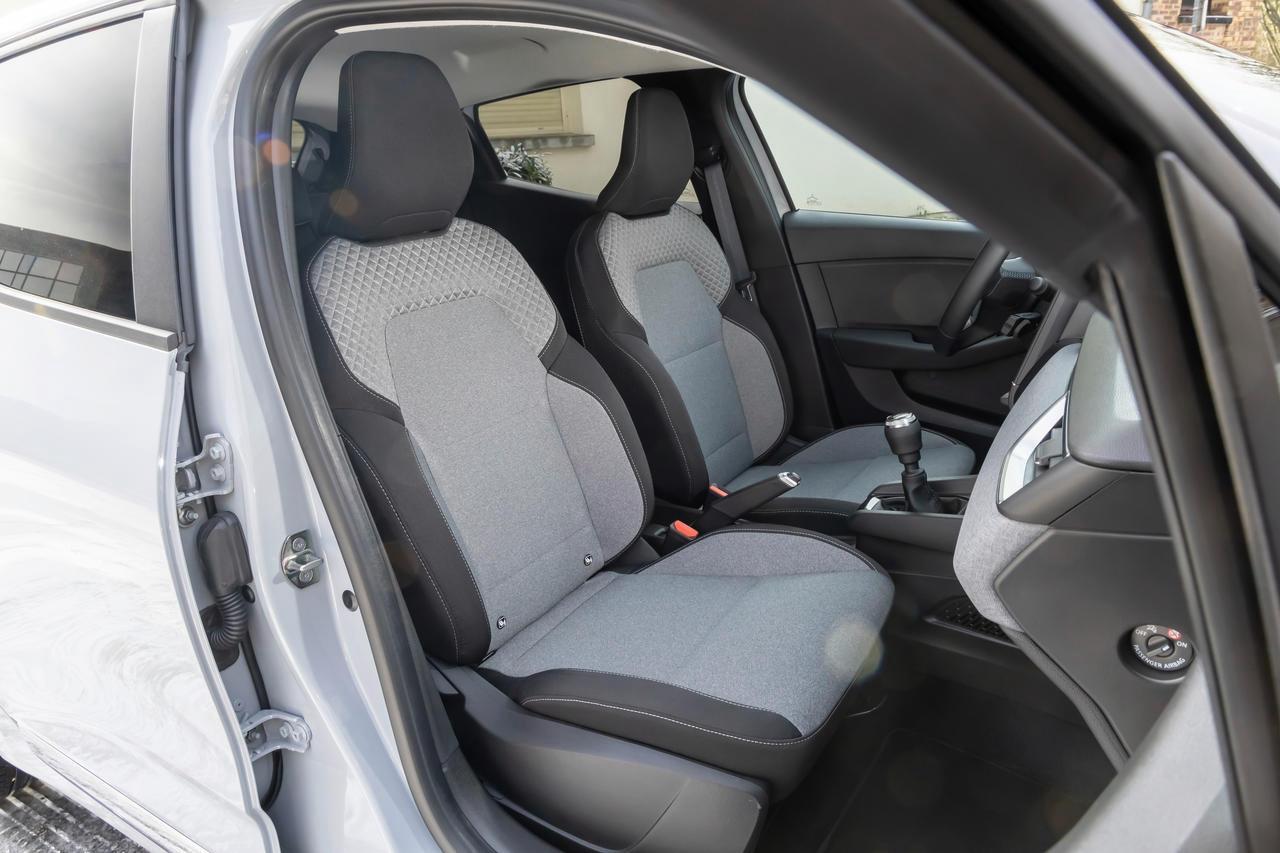
Clio 5 seat
3. Trim Noise When the topic of "trim noise" comes up in Clio 5 forums and user groups, things usually get heated.
- General Complaints: Many users report a specific rattling sound coming from under the front passenger seat and noises from the rear door/seat locking mechanisms, particularly on rough roads.
- My Experience: I did not experience any of these so-called chronic trim noises. The cabin remained solid and quiet throughout my usage. So, it is not a rule that every Clio will rattle; it is partly a matter of usage habits and a bit of luck.
Boot Space, Dimensions & Rear Legroom
When it comes to fitting inside, the Clio 5 has two different faces: The front side that makes the driver happy, and the rear side that might upset tall passengers a bit.
1. The Front: The "Big Car" Feel When you get behind the wheel or sit in the passenger seat, what you feel is definitely not the cramped sensation of a B-segment car.
- Spaciousness: Thanks to the dashboard design and seat structure, the vehicle feels wider than it actually is. Shoulder room is quite adequate; you don't rub shoulders with the passenger next to you.
2. Rear Legroom: The Challenge for Tall Passengers Unfortunately, the generosity found in the front is not present in the back. Let's be honest; the rear seats of the Clio 5 can be a bit claustrophobic, especially for those over 1.80 meters.
- Legroom Issue: If the person sitting in the front pushes their seat back a little, the rear passenger's knees will touch the front seat.
- Headroom: Since the roof structure slopes down towards the rear (a Coupe-like design), the heads of tall passengers might brush against the ceiling.
- In Summary: The rear is perfectly adequate and comfortable for children or short/average-height adults. However, if 3-4 adults are going on a long trip, those sitting in the back will need to stretch their legs during breaks.
3. Trunk Volume: Is 391 Liters Enough? Let's come to the most debated topic. Renault promises a trunk volume of 391 Liters for the petrol Clio 5.
- In Real Life: The trunk is deep and useful. Two large cabin-size suitcases and a few backpacks fit comfortably. However, the loading sill is a bit high; lifting a heavy suitcase and putting it inside might make you wish the threshold were lower.
- Not Enough? If you say "this isn't enough for me" or if you're carrying a long box from IKEA, the rear seats can be folded down. When you fold the seats, a huge space opens up, but let us note that it does not create a completely flat floor (a step remains).
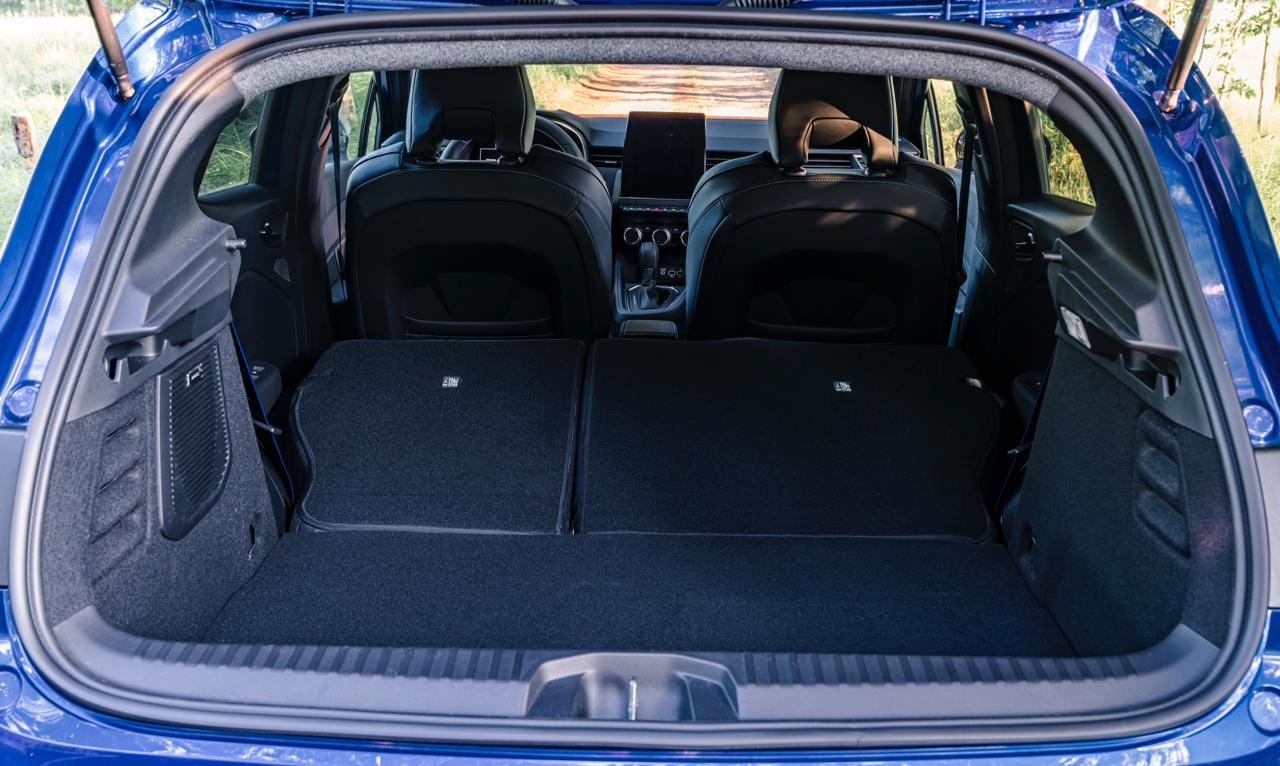
clio 5
Verdict: For a small family or an individual user, the trunk is quite sufficient. However, if a baby stroller, a pushchair, and suitcases need to go in at the same time, you might need to play a game of Tetris.
Common Faults & Reliability Issues
"I Bought a Clio 5, What Could Happen?" (The Common Issues List)
Just as every car has a character, it also has its tantrums. While the Clio 5 is generally not a vehicle that leaves you stranded on the road, it does have characteristic issues that send owners to the service center or get on their nerves. Here is the list:
1. Right Engine Mount Failure (The Famous "Clunking" Sound)
- Symptom: Especially when the car is cold, on rough roads, going over speed bumps, or during initial take-off, a deep "thud" or "clunk" sound comes from the front right side (passenger side). It also causes noticeable vibration in the cabin at idle.
- Status: This is the most famous chronic issue of the Clio 5 (and its sibling, the Captur). Due to the part's design, it wears out quickly.
- Solution: Replacement. It is frequently changed under warranty, but it has a habit of recurring.
2. Turbo Wastegate Rattle (Metallic Jingling)
- Symptom: Particularly in 1.0 TCe engines, when you take your foot off the gas (deceleration) in the 2000-3000 RPM band, a metallic "jingling" or "rattling" sound comes from the engine.
- Status: It is not a mechanical failure and does not cause power loss; it is a characteristic resonance of the wastegate linkage rod.
3. Start-Stop System Not Working ("Battery Charging")
- Symptom: You stop at traffic lights, but the engine doesn't turn off. The screen constantly displays "Battery Charging" or "Prioritizing Battery Charge." Even after months, the Start-Stop never activates.
- Status: The Clio 5's Energy Management System (EMS) is very sensitive. As soon as the battery voltage drops below 80% (which happens quickly with short city trips), it disables the system to protect the battery.
4. Multimedia Screen and Software Lags
- Symptom: You press the volume up/down button, there is no response for 5 seconds, and then suddenly the volume blasts. Sometimes the screen remains black, or Apple CarPlay disconnects.
- Status: Hardware limitations (processor) or software bugs of the early Easy Link system.
- Solution: It is improved with software updates at the service center, but those momentary delays (lag) may not be completely eliminated due to hardware constraints.
5. Trim Noises (B-Pillar and Door Locks)
- Symptom: "Clicking" or "ticking" sounds come from the pillar where the seatbelt comes out (B-pillar) or from the door lock strikers, especially in hot weather or on rough roads.
- Status: Lack of insulation material or assembly tolerances.
- Solution: Service centers solve this by applying insulation tape or greasing/replacing the lock strikers.
6. Fuel Gauge Inconsistency
- Symptom: You fill the tank completely, but the needle doesn't show full, or the low fuel light turns on suddenly when the tank is half full.
- Status: A software calibration issue.
- Solution: Corrected with an Instrument Cluster software update.
7. Water Pump Noise
- Symptom: A whistling sound heard from the belt side of the engine at idle.
- Status: Can be seen in high-mileage or stressed 1.0 engines.
- Solution: Part replacement is mandatory; it should not be neglected.
8. Flexplate (Flywheel) Issue (Rare but Expensive)
- Symptom: In vehicles with CVT (X-Tronic) transmission, metallic sounds heard while cranking the engine (starting) or the vehicle refusing to engage in gear.
- Status: It involves the ring gear/plate connecting the engine to the transmission. While rare compared to other issues, it is a significant mechanical repair.
Review Score
Drivisual Verdict
"Why Did I Choose It for the Second Time? This car is not flawless; we have openly discussed all potential chronic issues regarding the transmission, engine, and interior above. However, looking at market realities, the Clio 5 remains the "most affordable option that can do it all." Precisely because of this price-performance balance, I chose it for the second time (this time the automatic version after the manual one), and I am very satisfied. The chronic issues we mentioned are not a rule; they don't happen to every car. In fact, many people I recommended this car to have been using it without any problems. In Summary: Unless you are a large family, it remains one of the most logical and accessible choices available, especially for city driving."
Technical Specifications
Detailed Data
Owing to a shortage of semiconductors caused by the Covid pandemic, the Clio "Zen" "Life" "Série LimitéeLimited", "Business’’, "Intens" and "Série Limitée Lutecia’’ versions do not have all of the safety features required for the 2019 5-star class. In particular, these vehicles are offered without radar, which is necessary to provide effective autonomous emergency braking (AEB). Clio models with a "RS Line’’ and "Initiale Paris’’ designations are not affected and the 5-star rating applies. The Renault Clio E-TECH Hybrid is a variant of Clio. Some additional tests and checks have been done to ensure that the rating of the Clio, tested in 2019, applies to the hybrid variant.
This test is performed by km77.com. Results may vary depending on vehicle version and tires.
WLTPFuel Consumption
| Driving Scenario | Consumption (L/100km) |
|---|---|
| Low Speed | 5.6 L |
| Medium Speed | 3.6 L |
| High Speed | 4.3 L |
| Extra High Speed | 6 L |
| COMBINED | 5.3 L |