
Toyota Corolla 1.5 Dream Fuel Consumption, Driving Experience and Common Problems

Toyota Corolla General Information
The test vehicle used in this review is the 2024 model Toyota Corolla 1.5L naturally aspirated version (mid-level trim), and the evaluations are entirely based on this engine and equipment combination.
The Toyota Corolla is known as one of the best-selling models in global automotive history. First launched in 1966, it has now reached its 12th generation. The current chassis sold in Europe is the 12th generation Corolla with the E210 body code.
This generation was first introduced globally in 2018. The model, which received a facelift in 2023/2024, was updated especially with a new multimedia system, safety technologies, and various equipment upgrades.
In Europe, the Corolla is generally sold with two main engine options (depending on the specific market):
- 1.5-liter naturally aspirated petrol (which replaced the older 1.6L in many EU countries).
- 1.8L and 2.0L Hybrid variants.
In this review, we are focusing on the entry-to-mid-level 1.5-liter naturally aspirated engine and automatic transmission combination.
Toyota Corolla Engine (1.5 VVT-i)
The 1.5-liter, three-cylinder naturally aspirated petrol engine in our test vehicle is a member of Toyota's new-generation Dynamic Force engine family.
Technical data for this engine:
- Engine displacement: 1490 cc
- Number of cylinders: 3
- Power: 125 hp
- Torque: 153 Nm
It may not look very powerful on paper, but the engine's character is quite linear and smooth.
At initial throttle inputs, the engine operates quietly and refined. Especially in city driving at low RPMs, the engine's vibration level is lower than expected.
When reaching higher RPMs, the three-cylinder structure becomes slightly more noticeable, but this is not at a disturbing level in daily use. The characteristic, slightly throaty running sound of 3-cylinder engines adds a sweet sportiness to the vehicle. You shouldn't expect the sudden low-end burst of turbocharged engines; this is a naturally aspirated unit and it makes its power felt at higher revs (around the 4800 RPM band). Although it is designed with a focus on longevity and efficiency rather than performance, it does not feel lacking in daily use or when reaching highway speeds.
Toyota Corolla Transmission
The Direct Shift-CVT (Multidrive S) transmission used in the 2024 Toyota Corolla 1.5 is developed by Aisin. Aisin is a crucial engineering partner within the Toyota Group, with its signature on many of the brand's automatic transmission systems.
Unlike classic CVT systems, this transmission aims to offer a more natural and mechanical feel by using a physical "launch gear" when accelerating from a standstill.
- The slipping rubber-band sensation of a CVT is reduced.
- Mechanical durability is increased.
Furthermore, the transmission's electronic control system is programmed to make the variable ratio structure feel stepped during driving. As a result, although it is not a fixed-ratio transmission, it operates in a way that simulates the feel of a 10-speed automatic transmission.
In city driving, the transmission's character is very calm and comfort-oriented. As long as you don't press the gas pedal hard, you don't feel the gear shifts because the CVT accelerates using a constant RPM logic. While it doesn't offer an exciting character for performance-oriented drivers, it provides a very comfortable ride for daily use.
Toyota Corolla Engine & Transmission Harmony
The harmony between the naturally aspirated engine and the Multidrive S transmission is flawless. The engine's lack of torque at low revs is masterfully masked by the transmission's physical launch gear. On highway drives, the transmission doesn't strain the engine; the vehicle can cruise extremely comfortably and quietly at speeds of 130-140 km/h, revving at only 3000 RPM in its highest virtual gear (10th ratio).
Toyota Corolla Fuel Consumption
- Factory Data: The combined fuel consumption is stated as 6.1 to 6.3 liters/100 km according to WLTP standards. It is possible to approach these figures with gentle driving.
- Real-World Usage: In heavy city traffic, these figures can rise quickly. Some users report seeing instantaneous or average consumption figures between 9 and 12 liters in dense traffic.
- Engine Oil Warning: One of the most important details is using the correct engine oil during maintenance. Using thicker oils like "5W-30" instead of the required low-viscosity oils (0W-16 or 0W-20) makes it difficult for the engine to switch to the fuel-saving Atkinson cycle, directly and significantly increasing fuel consumption.
Toyota Corolla Driving Feel

Toyota Corolla POV
- Handling: Unlike many competitors in the C-segment, the Corolla features a fully independent double-wishbone rear suspension as standard. This minimizes body roll in corners and gives the vehicle a mature, highly secure, and premium handling character.
- Insulation (NVH): While the suspension absorbs potholes very successfully, the "road and tire noise" leaking into the cabin on rough, coarse-aggregate asphalt continues to be one of the brand's weak points carried over from previous generations.
Toyota Corolla Equipment (Mid-Level Trim)
The mid-level equipment packages offer a great price-to-benefit ratio and meet expectations quite well.
- Premium Safety (TSS3): The Toyota Safety Sense 3 package comes standard. It includes features like a pre-collision system with pedestrian and cyclist detection, adaptive cruise control (ACC), lane tracing assist, and emergency steering assist.
- Digital Technologies: A fully digital and customizable 12.3-inch driver display and an 8-inch or 10.5-inch touchscreen multimedia display with wireless Apple CarPlay / Android Auto support are standard. A wireless charging unit is also located in the center console.
- Shortcomings: Even though it looks very high-tech from the outside, some mid-level trims lack keyless entry and push-button start; a classic switchblade key is used. Also, premium features like a sunroof or Blind Spot Monitoring (BSM) require upgrading to the highest trim levels.
Toyota Corolla Interior Space
- Passenger Space: With a very generous wheelbase of 2700 mm, the Corolla offers a spacious rear legroom that rivals D-segment cars, making it highly comfortable for rear passengers. Rear ventilation vents for the dual-zone digital climate control further enhance comfort.
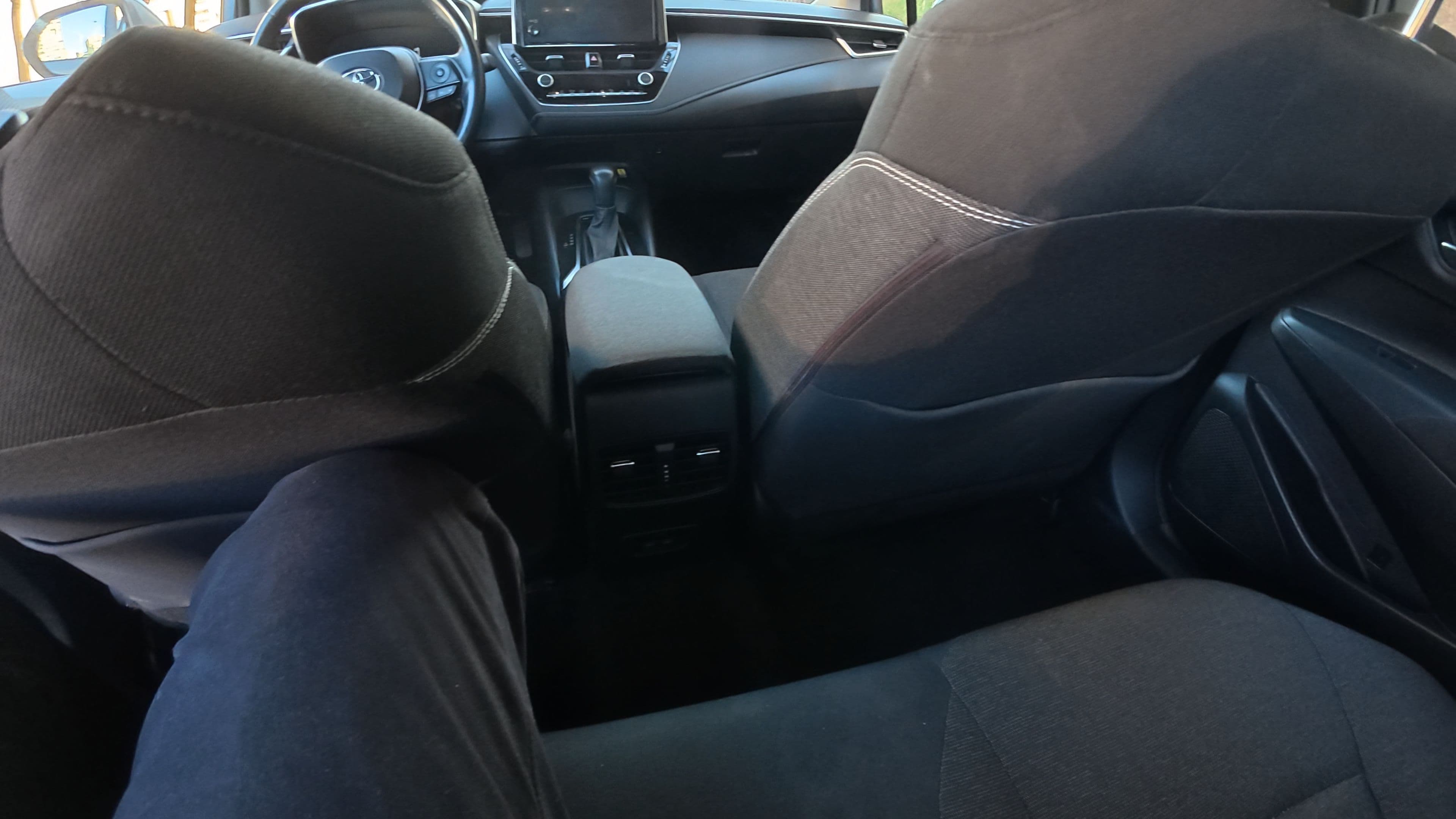
Toyota Corolla
- Trunk Volume: The sedan's trunk volume is 471 liters. While this may look slightly smaller on paper compared to some competitors offering over 500 liters, the square design of the trunk makes the space highly usable. The rear seats can be folded down in a 60:40 ratio to create extra room for long items. It is more than sufficient for all the needs of a family.
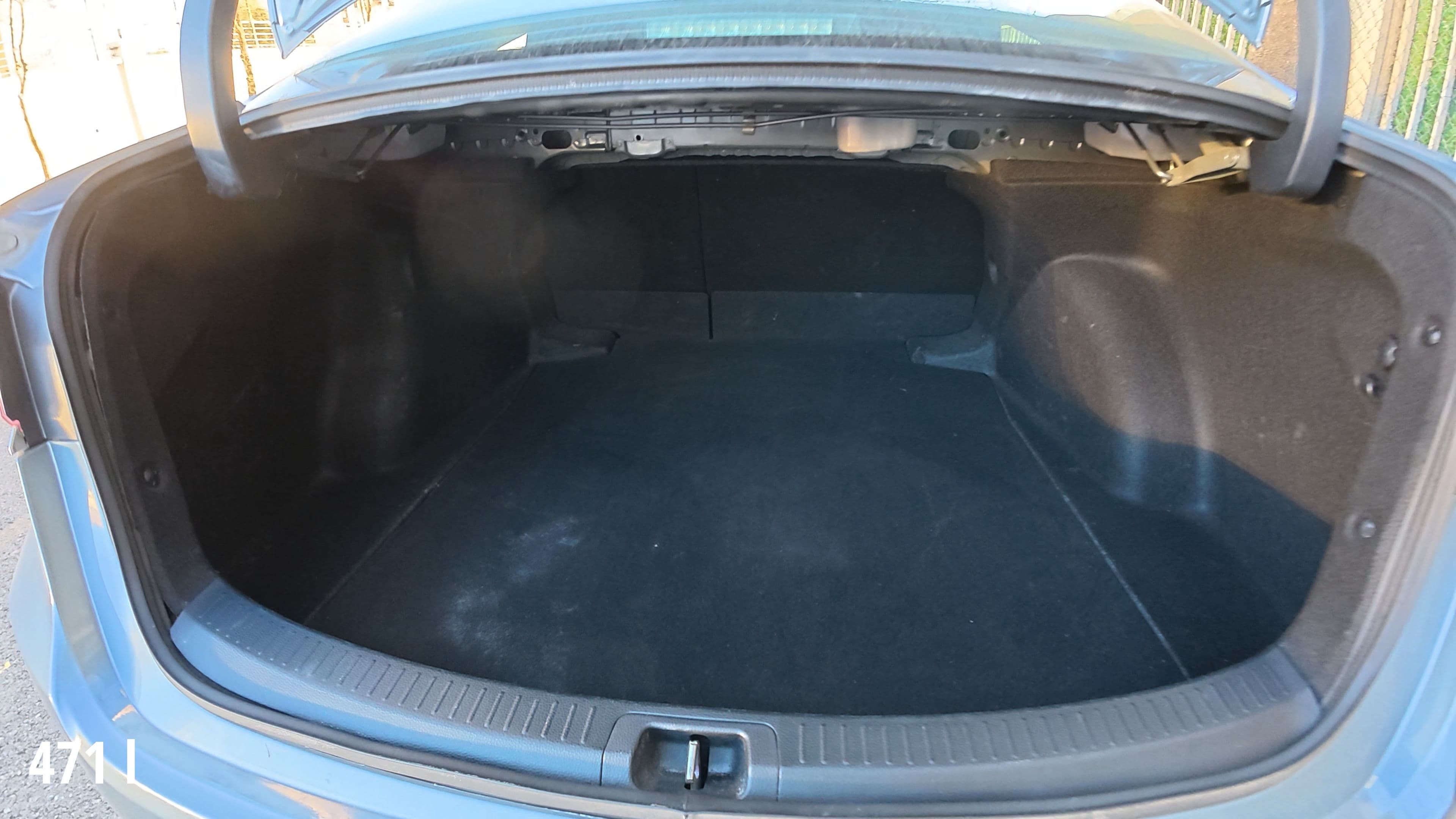
Toyota Corolla Boot Capacity
Toyota Corolla Chronic Issues and Recalls (European Context)
Issues Experienced in Europe: EGR Cooler Based on European technical service bulletins and user forums, one of the most serious chronic complaints coming from 1.5L Dynamic Force owners is the failure of the EGR (Exhaust Gas Recirculation) cooler.
- What does the service do? The EGR cooler tends to corrode and leak coolant (antifreeze) directly into the engine. In Europe, Toyota has sometimes attributed this failure to "high chlorine content in gasoline" and refused to cover it under warranty, leaving the customer with expensive repair bills.
- Solution / Recommendation: Always use high-quality fuel from reputable stations. If you notice a sudden drop in engine coolant levels or thick white smoke coming from your exhaust, stop the vehicle and contact your service center immediately.
What is the Situation on Reddit and Foreign Forums?
On major platforms like Reddit, European user complaints regarding the 3-cylinder 1.5L engine focus heavily on noise and vibration:
- Tractor Sound: Users complain that the 3-cylinder engine runs loudly and with a knocking sound, almost like a "diesel" or "tractor," especially at low speeds under 2000 RPM. (Mechanics explain that this is not a defect, but rather the working character of the high-pressure D-4S fuel injection system).
- Transmission Jerking: There are serious complaints that the transmission makes hard gear shifts and jerks the car when accelerating at low speeds. Services usually dismiss this situation by saying "we tested it, but couldn't find a problem" and hand the car back.
Are There Official Recalls (EU Safety Gate / RAPEX)?
Yes, Toyota has initiated official safety recalls in the European market providing free repairs:
- Brake Pedal Issue (2023-2024 Models): A software error in the skid control ECU can cause the brake pedal to suddenly stiffen while cornering, reducing braking force and increasing stopping distance, which creates a collision risk.Solution: Toyota dealers across Europe are recalling affected vehicles to update the brake system's software for free.
- Rearview Camera Freezing: Another software update campaign has been launched because the rearview camera fails to open or freezes for nearly 2 seconds when shifting into reverse, creating a risk of hitting pedestrians or children behind the car.
- Data Communication Module (DCM): The EU Safety Gate reports a recall for 2020-2023 models where the DCM can abruptly reset due to a software error, disabling the e-Call emergency system.
Recommendation: Before taking delivery of your vehicle, you should definitely check the official Toyota website of your respective country using the chassis number (VIN) to see if there is an open recall or pending free update waiting for your car.
Review Score
Drivisual Verdict
" The 2024 Toyota Corolla 1.5L Dream is the epitome of a rational, budget-friendly family sedan. It shines with its class-leading safety features, spacious rear cabin, and a surprisingly smooth CVT that makes city commuting effortless. However, it is important to realize that this is no longer the "abuse-friendly" Toyota of the past. The 3-cylinder engine is notably noisy and vibrates at low speeds. More importantly, it demands strict adherence to maintenance protocols—specifically using the required 0W-16 oil to prevent severe engine damage and keeping a close eye on the EGR cooler. If you are a calm driver looking for an economical A-to-B commuter and are willing to strictly follow the correct maintenance schedule, it remains a highly logical purchase. For performance seekers, look elsewhere."
Pros
- Standard advanced safety features (Toyota Safety Sense 3) including adaptive cruise control and lane assist.
- Independent double-wishbone rear suspension provides premium handling and stability.
- Spacious cabin with generous rear legroom and a highly usable 471-liter trunk.
- Smooth city driving experience thanks to the "launch gear" equipped CVT transmission.
Cons
- Noticeable 3-cylinder engine noise and vibration, especially at low RPMs (often described as sounding like a tractor).
- High risk of expensive EGR cooler leaks and failures requiring costly repairs.
- High road and tire noise intrusion into the cabin on rough surfaces.
- Extreme sensitivity to engine oil type; using 5W-30 instead of the required 0W-16 leads to high fuel consumption and potential engine bearing seizures.
WLTPFuel Consumption
| Driving Scenario | Consumption (L/100km) |
|---|---|
| Low Speed | 7.8 L |
| Medium Speed | 5.6 L |
| High Speed | 5 L |
| Extra High Speed | 6.2 L |
| COMBINED | 5.7 L |