Opel Mokka Review: Performance, Fuel Economy & Common Problems
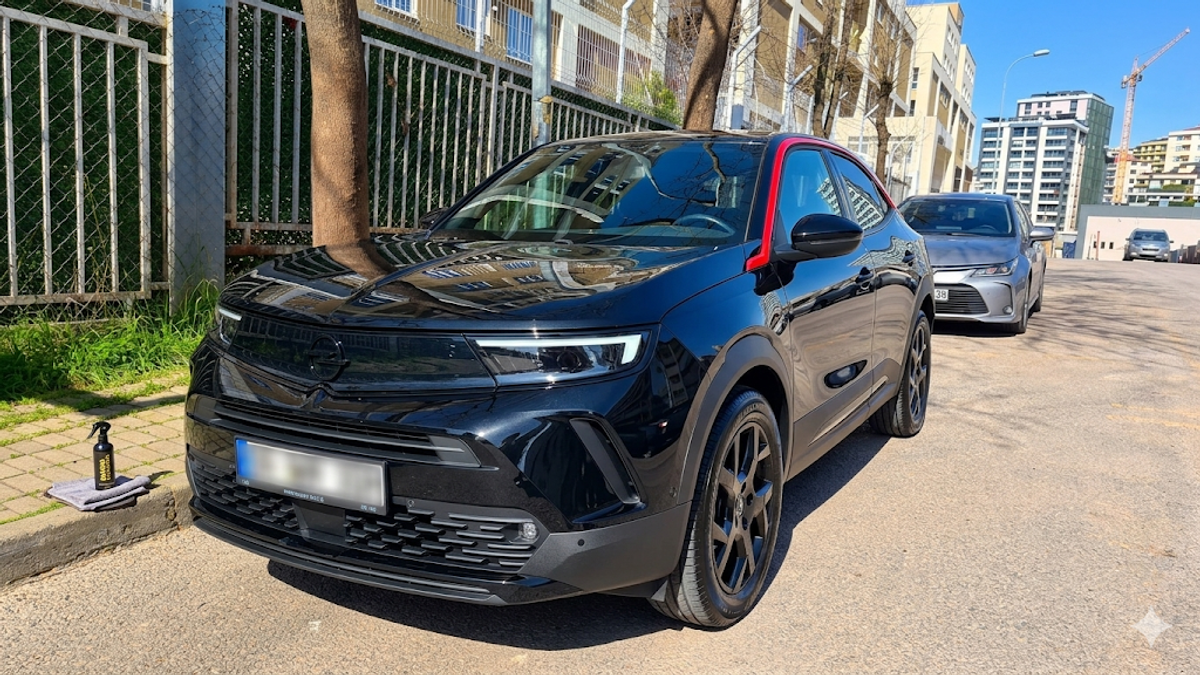
General Information – Opel Mokka 2024
The test vehicle we used for this review is the 2024 Opel Mokka GS 1.2 Turbo version, and our evaluations will be based entirely on this engine and trim level.
The Opel Mokka is a compact crossover positioned in the B-SUV segment. In this class, it faces some pretty tough rivals like the Peugeot 2008, Renault Captur, Volkswagen T-Cross, Nissan Juke, and Skoda Kamiq.
The new generation Mokka is built on the Stellantis group's CMP platform. We see this exact same platform in models like the Peugeot 208, Peugeot 2008, Jeep Avenger, and Alfa Romeo Junior. The biggest advantage of this platform is its contribution to lightness and driving dynamics.
The 1.2-liter turbo engine in our test car produces 130 horsepower and 230 Nm of torque. This engine is paired with an 8-speed EAT8 torque-converter automatic transmission. Its 0-100 km/h acceleration is around 8.9 seconds, and the top speed is right around 200 km/h.
There’s a crucial detail regarding the engine: Even though Opel markets it under different names, this is actually the widely used 1.2 PureTech engine from the Stellantis group. We already have a separate, highly detailed article where we discussed the chronic issues and maintenance details of this engine. Here, we'll just touch on the basics.
Opel Mokka Engine (1.2 Puretech)
This engine belongs to the PureTech family used in many Stellantis models. The 1.2-liter turbo PureTech engine offers 130 hp and 230 Nm of torque. I previously experienced this engine in the Peugeot 408, which is much larger and heavier than the Opel Mokka, and it didn't feel lacking in performance at all. Naturally, in the Mokka's compact and lightweight body, this engine feels quite lively; it is more than satisfying during mid-range acceleration and city driving.
However, there is an important detail here. If you pay attention to things like:
- using the correct engine oil
- not delaying maintenance intervals
- replacing the belt on time (it should be checked every 40-50 thousand kilometers)
As I linked in the previous heading, I’ll say it again: if you are thinking of buying one, you absolutely must read this article: CLICK HERE. If you pay attention to these points, you can drive this engine problem-free for a long time. The performance is great, but it’s a bit of a fussy engine when it comes to maintenance.
Opel Mokka Transmission and Driving Dynamics (EAT8 transmission)
Produced by the Japanese giant Aisin (which is also Toyota's main transmission supplier), the EAT8 transmission is one of the most trouble-free parts of the Mokka. You won't find the clutch wear, shuddering, or highly expensive mechatronic failure headaches that we often see in the Volkswagen group's DSG or other dual-clutch transmissions.
So, how is the EAT8 transmission? Well, with its imperceptible gear shifts in calm city driving and stop-and-go traffic, it’s a highly appreciated, comfort-focused gearbox. However, if you have an aggressive driving style and suddenly floor the gas pedal, its downshifting isn't as lightning-fast as a DSG. We can say it's slightly sluggish when it comes to sportiness, but these are tiny details that a standard, everyday user will never worry about or even notice.
Cars using the EAT8 transmission: You will come across the EAT8 transmission in many Peugeot, DS, Citroen, and Opel models.
Opel Mokka Fuel Consumption
In my own use over about 1500 km, my average consumption was 6.7 liters. In city driving, this figure can climb to around 8 – 8.5 liters. It's also fair to say that some users who drive more aggressively see consumption figures around 10 liters. The factory data is stated as approximately 6.1 L/100 km. But in real-world usage, the most realistic range in my opinion is: 6 – 8 liters This is a situation completely dependent on your driving style. Drivers who focus on economy can achieve lower consumption figures.
Opel Mokka Insulation
The Mokka is quite successful when it comes to engine noise. At idle, engine noise hardly enters the cabin at all. I didn't hear any disturbing engine noise during city driving either. I didn't have the chance to drive it at high speeds for long periods, but it definitely didn't leave a bad impression regarding insulation during city use.
Opel Mokka Driving Feel
The moment you get into the car, you feel its compact and tidy structure; the car literally feels like it's in the palm of your hand. Personally, I really love the agile and confidence-inspiring driving dynamics brought by the CMP platform (the infrastructure also used in cars like the Peugeot 208, 2008, Alfa Romeo Junior, Jeep Avenger, etc.). It has a solid stance on the road.
I can't make a very definitive comment about its brakes personally, because the car I tested was unfortunately a bit abused, a car with tired brakes, and the pedal feel wasn't at its best. However, when I talk to long-term Mokka users, they specifically state that the brake performance and stopping feel are excellent.
Opel Mokka Equipment
When we look at the equipment list by B-SUV class standards, I think the Opel Mokka is clearly one of the standout cars. The GS trim level we reviewed is truly a fully-loaded car.
I don't want to bore you by listing standard features since they are in every modern car. However, it has details that make a real difference in its segment: A heated steering wheel, heated seats, a blind-spot warning system, and paddle shifters behind the steering wheel greatly enhance the driving pleasure. But the star equipment that really needs to be mentioned is the "Intelli-Lux LED Matrix" headlights. During night drives, these headlights literally illuminate the road like a stadium and offer great visibility by only dimming the necessary areas without blinding oncoming drivers.
Opel Mokka Interior Space
One of the Mokka's weakest points is its interior space. Compared to its rivals, it falls a bit behind in both living area and trunk volume. The trunk volume is about 350 liters. Just to give you a comparison:
- Ford Puma → 456 liters
- Peugeot 2008 → 434 liters
- Opel Mokka → 350 liters
Opel made a really nice move by designing the trunk with two levels. There is a brilliant, well-thought-out space underneath for stashing small items and knick-knacks. Plus, the fact that the front door pockets are quite wide increases practicality in daily use. But looking at the big picture:
- Rear seat legroom is tight
- Trunk volume is below the class average Because of this, the Mokka is a vehicle more focused on city use.
Opel Mokka Chronic Problems
We've talked about the good sides of the car, but there are also some chronic and frustrating issues you definitely need to be aware of before buying it:
- Opel Mokka Roof Paint Peeling: One of the most common complaints is the roof paint peeling off over time.
- Classic 1.2 Puretech Problems: As I mentioned at the beginning of the article, the risk of the wet belt inside the engine wearing out, crumbling, and clogging the oil strainer is this engine's most well-known vulnerability. Knowing the maintenance history is of vital importance when buying this car.
Photo: Joachim Kohler / Wikimedia Commons
License: CC BY-SA 4.0
https://creativecommons.org/licenses/by-sa/4.0/
Review Score
Drivisual Verdict
"Verdict – Is the Opel Mokka Worth Buying? The Opel Mokka stands out in the B-SUV segment with its bold design and enjoyable driving feel. It’s a compact, well-equipped crossover that is particularly pleasant to drive in the city thanks to its agile handling and comfortable automatic transmission. However, buyers who prioritize interior space may find alternatives like the Peugeot 2008 or Ford Puma to be more practical options."
Pros
- Smooth and reliable EAT8 automatic transmission
- Strong equipment and technology features
- Excellent Intelli-Lux LED matrix headlights
- Dynamic and agile driving feel
- Heated seats
Cons
- PureTech engine requires careful maintenance
- Interior space is smaller than many rivals
- Boot space is below the class average
- Some owners report paint peeling issues on the roof
- Apple CarPlay and Android Auto are not wireless
- No overhead grab handles (above the doors)
- No rear interior roof light
- Rear windows only roll down halfway
WLTPFuel Consumption
| Driving Scenario | Consumption (L/100km) |
|---|---|
| Low Speed | 7.7 L |
| Medium Speed | 6 L |
| High Speed | 5.2 L |
| Extra High Speed | 6.4 L |
| COMBINED | 6.1 L |